
DuraFlex Chimney Sweep in Edmond: A Homeowner’s Guide
DuraFlex is a flexible stainless steel relining system, and if you own a home in Edmond with one in the flue, you own a piece of equipment with specific maintenance requirements. Most homeowners don’t know what they actually have up there, and that gap matters. DuraFlex carries a lifetime warranty, but that warranty has conditions, and sweeping with the wrong brush type is enough to put you outside them. If you’d rather not sort that out yourself, call (844) 834-5906.
This guide covers what a DuraFlex liner is, how it should be cleaned, how to check that yours was installed right, and the warning signs that something’s off.
What Is a DuraFlex Liner, and Why Do So Many Edmond Homes Have One?
A DuraFlex liner is a flexible stainless steel tube that gets pulled down through an existing chimney to create a new, sealed flue inside the old one. It’s the standard fix when the original clay tile liner has cracked, spalled, or pulled apart at the joints.
That situation is common in Edmond’s older housing stock. Clay tile liners were built to last decades, but they weren’t built to last forever, and the freeze-thaw swings we get here work on them year after year. When a tile cracks, the chimney no longer safely contains what goes up it. Combustion gases can escape into the wall cavity or attic, and creosote can collect in places you can’t reach with a brush.
A stainless liner solves that without tearing the chimney apart. It’s also the practical answer when someone installs a new appliance that needs a different flue size than the original tile provides. That’s the second reason DuraFlex shows up in so many Edmond homes: it lets a wood stove or gas insert vent correctly without a masonry rebuild.
What matters for you as a homeowner is this: once that liner is in, it becomes the flue. It’s what needs cleaning, what needs inspecting, and what needs protecting. We work on the whole system, not just the part you can see.
How Should a DuraFlex Liner Be Cleaned?
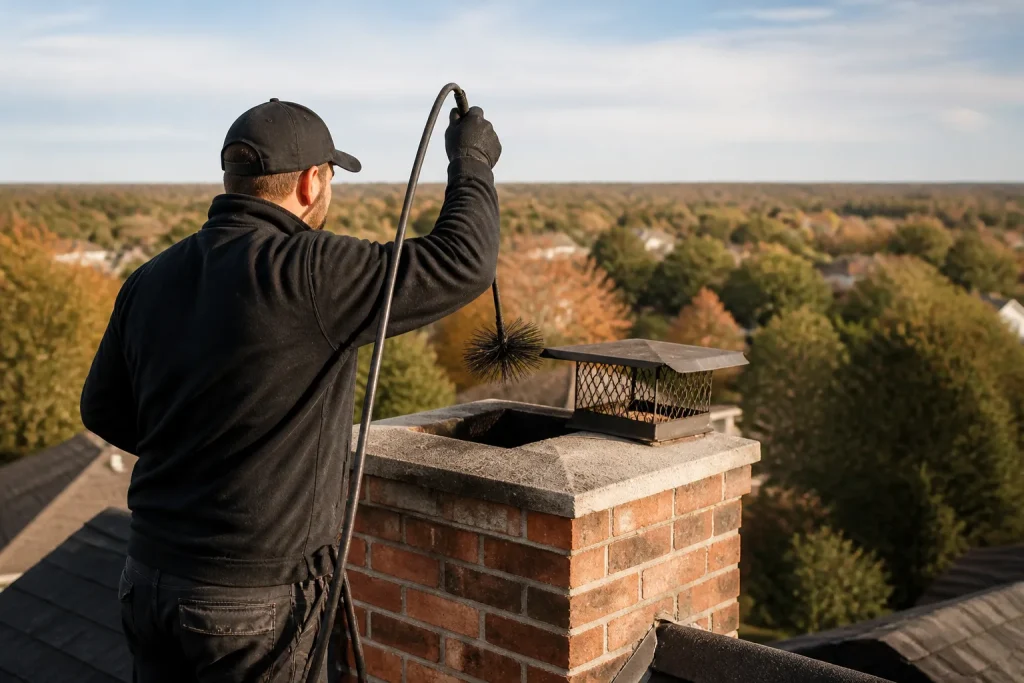
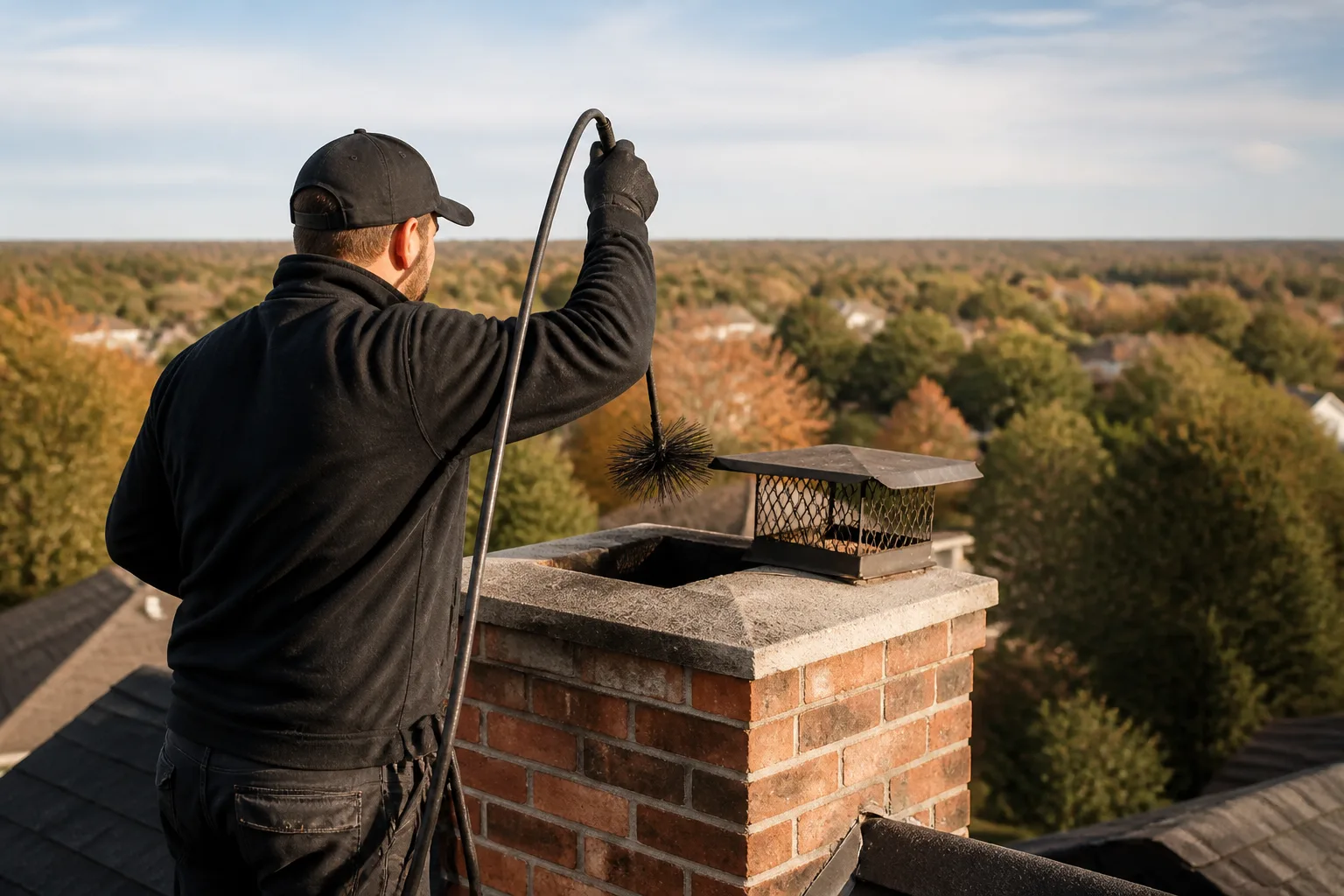
A DuraFlex liner should be swept with a poly brush sized to the liner’s actual inside diameter, worked from the top or bottom with controlled strokes. Standard brushes or oversized brushes damage the corrugated surface, and that damage is permanent.
The corrugated wall is the detail people miss. A flexible liner isn’t smooth pipe; it has ridges running its length, and those ridges are where creosote likes to sit. They’re also where a brush that’s too stiff or too wide will scrape and score the stainless.
What a proper sweep of a DuraFlex flue involves:
- Correct brush material. Poly brushes are the standard for stainless flex liner. Wire brushes are for masonry flues, not this.
- Correct brush diameter. Matched to the liner size, not “close enough.” An oversized brush fights the corrugation and stresses the seams.
- Controlled technique. Consistent strokes, not a rotary whip at high speed. Flex liner doesn’t need aggression.
- A look at the appliance connection. The point where the liner meets the stove or insert collar is where problems start, and it’s easy to skip if you’re only thinking about the flue.
In our experience, the liners that fail early aren’t usually the ones that got swept too often. They’re the ones that got swept wrong, or never swept at all until the creosote had already baked on. A clean chimney is the starting point. A safe chimney is the goal.
How Do You Verify a DuraFlex Liner Was Installed Correctly?
You verify a DuraFlex installation by checking three things: the termination height at the top, whether the liner is insulated, and whether the top plate is seated and sealed. All three are visible during an inspection.
Most homeowners have never looked at their own chimney top. That’s normal, and it’s also why installation problems go unnoticed for years. Here’s what a correct install should show:
- Termination height. The liner should extend above the crown to the height the appliance and roof profile require. Short of that, draft suffers and the appliance doesn’t vent the way it should.
- Insulation wrap. An insulated liner holds heat in the flue, which keeps the exhaust moving and reduces creosote condensation on the stainless. An unwrapped liner in an exterior chimney is working harder than it needs to.
- Top plate seating. The plate should sit flat and sealed against the crown. A plate that’s cocked, caulked sloppily, or not fastened down lets water in and lets the liner shift.
There’s a fourth check that only shows up from inside: whether the liner was sized for the appliance it serves. A liner that’s too large for a wood stove won’t stay warm enough to draft well. One that’s too small chokes the appliance. Neither problem announces itself clearly. Both show up in how the fire behaves.
We check all of this as part of our chimney sweep, because a sweep without a look at the liner is only half the job.
What Are the Signs a DuraFlex Liner Is Failing?
The signs of a failing DuraFlex liner are a change in draft, visible corrosion or seam separation at the top, water staining, and creosote buildup that keeps coming back in the same spot. Any one of these is worth a closer look.
Watch for these in your own chimney:
- Draft that’s gotten worse. Smoke rolling into the room on startup, or a fire that’s harder to keep going than it used to be.
- Rust or white corrosion staining around the top plate or on the visible liner section.
- Water in the firebox after rain, which usually points to a top plate or cap problem rather than the liner itself.
- Creosote returning fast in one area of the flue, which can mean a seam or a cold spot.
- An odd smell from the fireplace when it’s not in use.
Improper sizing shows up differently. It looks like an appliance that never quite performs, a glass door that soots up quickly on a gas insert, or a wood stove that needs the damper fussed with constantly. Those are symptoms of a flue that doesn’t match the appliance, and they don’t fix themselves with more sweeping.
If any of this sounds familiar, the answer isn’t guesswork. It’s a camera inspection, which tells you what’s actually happening inside the flue.
Why Does It Matter That Your Sweeper Also Installs DuraFlex?
It matters because the person cleaning your liner should be able to recognize a problem and fix it with the right parts, not hand you a business card for someone else. When sweep and repair are separate calls, small issues get deferred until they’re expensive ones.
We work with professional-grade materials, not whatever’s available at the hardware store. That means DuraFlex for relining, HeatShield for resurfacing flues that can be repaired without demolition, and Gelco and Olympia Chimney for caps and venting hardware. Trusted brands, applied by specialists who know how they perform in real chimneys.
In practice, a visit from a specialist looks like this: we sweep the flue, we run a camera inspection on the liner and the appliance connection, and if something’s wrong we can carry the repair through. Sweep, inspect, fix, done. No second contractor, no gap between a diagnosis and the repair, no lost information between visits.
For Edmond homeowners, that continuity is worth more than a coupon. A liner’s condition is a story that builds over years, and having one company see it from the start means fewer surprises.
If the inspection does turn up damage, our chimney repair work covers relining and resurfacing with the same materials.
The Bottom Line
If you own a home in Edmond with a DuraFlex liner, the practical takeaways are:
- Sweep with a poly brush sized to the liner, never a wire brush or an oversized one.
- Have the top termination, insulation, and top plate checked during the sweep, not after a problem.
- Treat a change in draft or recurring creosote as a signal, not an annoyance.
- Work with someone who can inspect, diagnose, and repair with professional-grade parts.
Our technicians have up to 14 years of experience, and we work on the full system: sweep, inspection, and repair. If you’re in Edmond and need help, Edmond Chimney Sweep offers free estimates. Call (844) 834-5906. We answer 24/7, with fast dispatch from 7am to 7pm, Sunday through Friday.
Frequently Asked Questions
You can physically run a brush down it, but getting the brush type and diameter right is where DIY goes wrong. A wire brush or an oversized poly brush will score the corrugated stainless, and that damage doesn’t come back. If the liner is inside its warranty, an improper sweep can affect coverage. For most homeowners, a proper sweep with the right brush is worth the call.
Once a year is the standard baseline for a wood-burning appliance, and more often if you burn heavily or the flue accumulates creosote quickly. The only way to know your own rate is to have it checked and see how much is there. If you’re in Edmond and want a straight answer, call (844) 834-5906.
DuraFlex carries a lifetime warranty with conditions, and improper cleaning is one of the things that can put you outside them. The warranty protects against defects, not against a brush that was the wrong size. Keeping records of who swept it and when is the simplest protection you have.
Check the appliance it serves and how it behaves. A wood stove that won’t draft well or a gas insert that soots its glass quickly are signs of a mismatch. The confirmation comes from a camera inspection that measures the flue against the appliance requirements. We can run that inspection and tell you plainly what we find.
Written by the team at Edmond Chimney Sweep.
Need Chimney Cleaning Help?
Call Edmond Chimney Sweep - licensed & insured, here with fast help in Edmond.
(844) 834-5906