
Last updated November 16, 2026
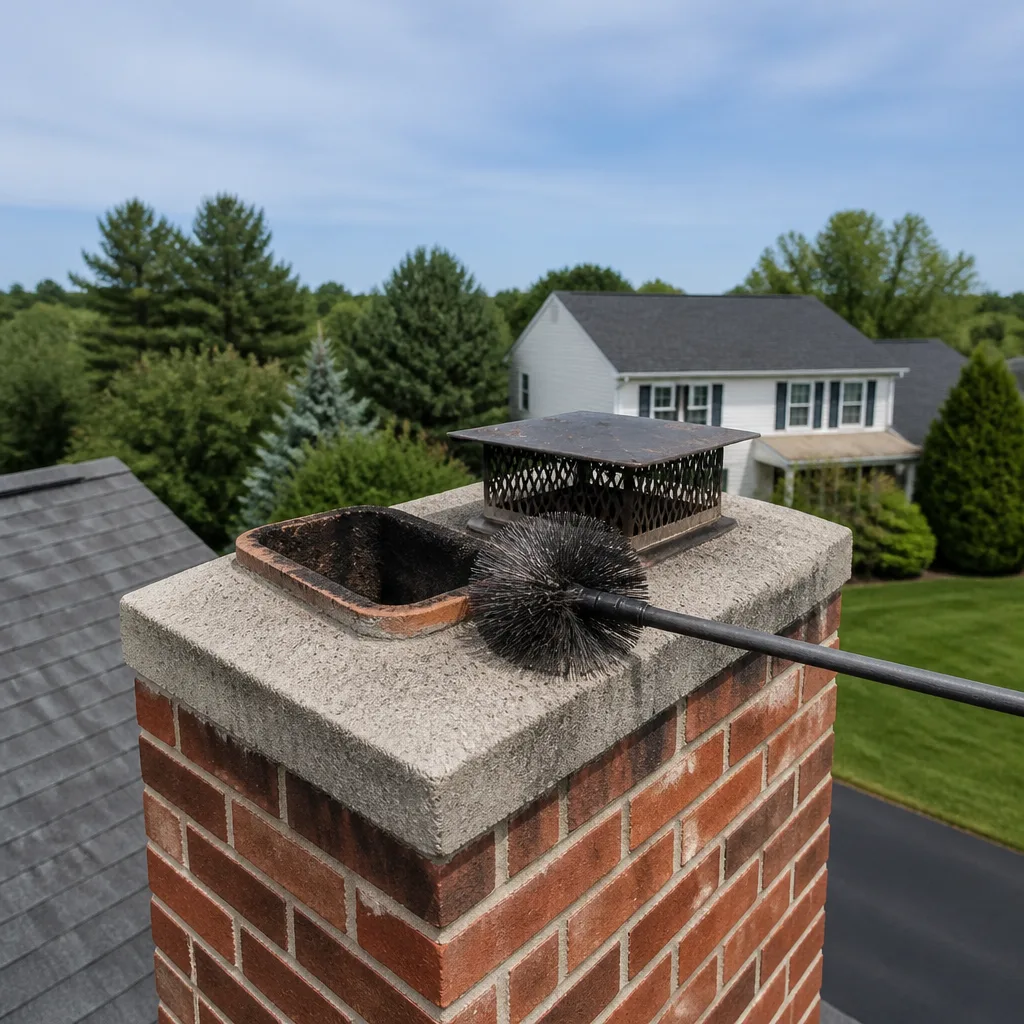 Sweep & inspection
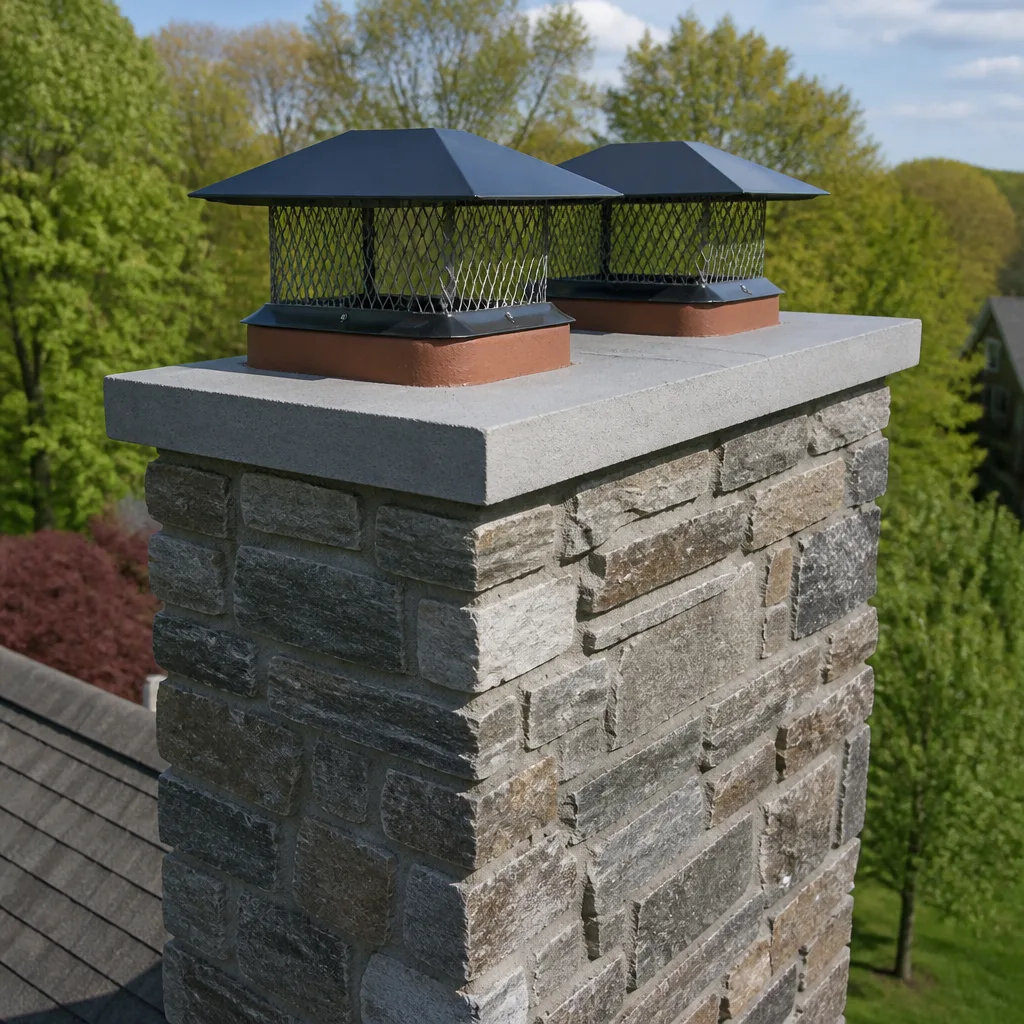 Caps & crowns
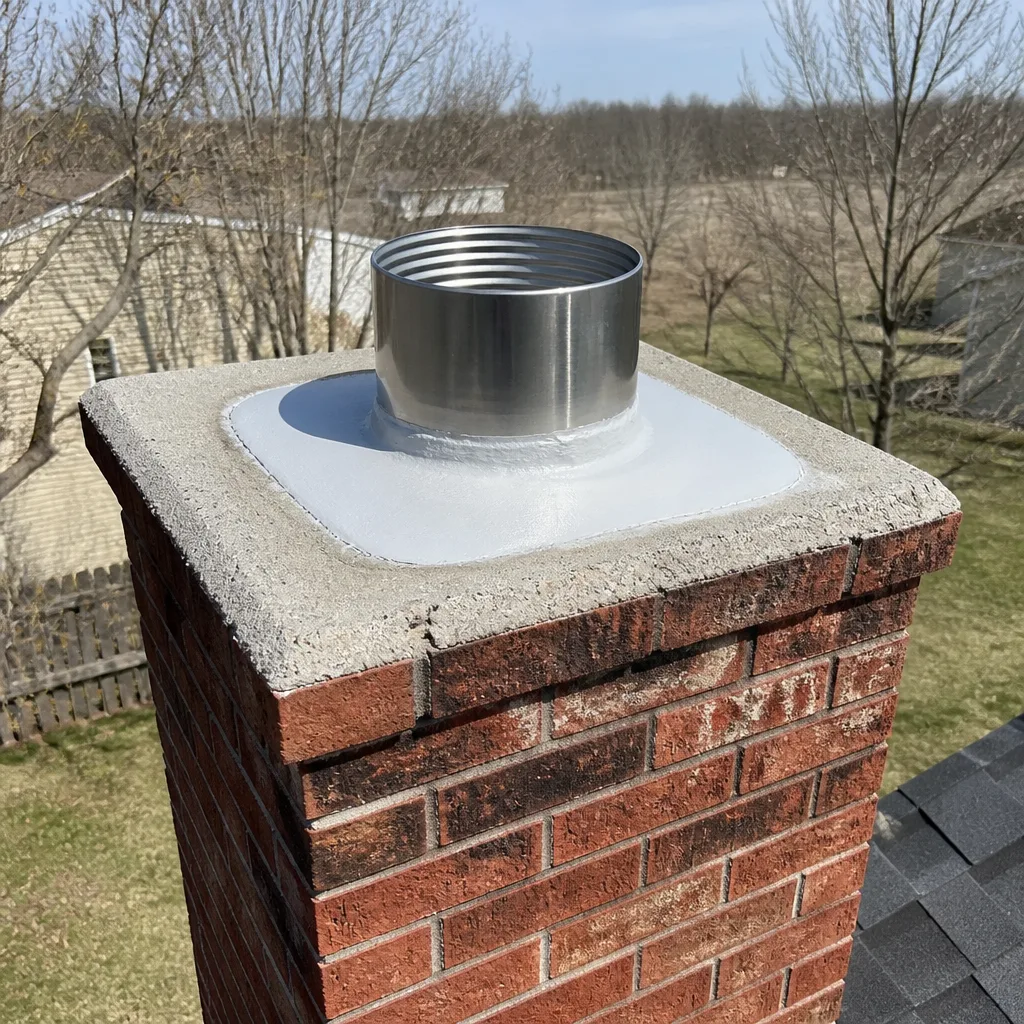 Flue relining
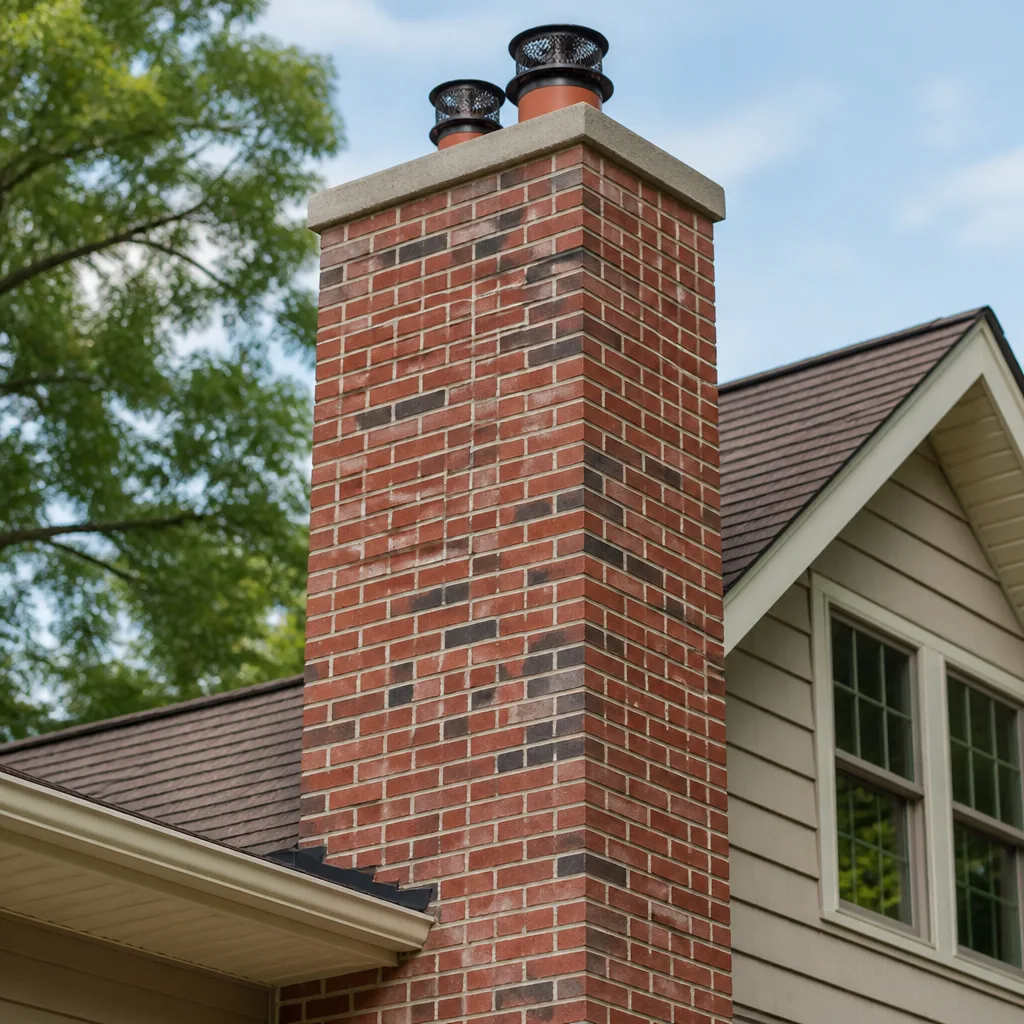 Masonry repair
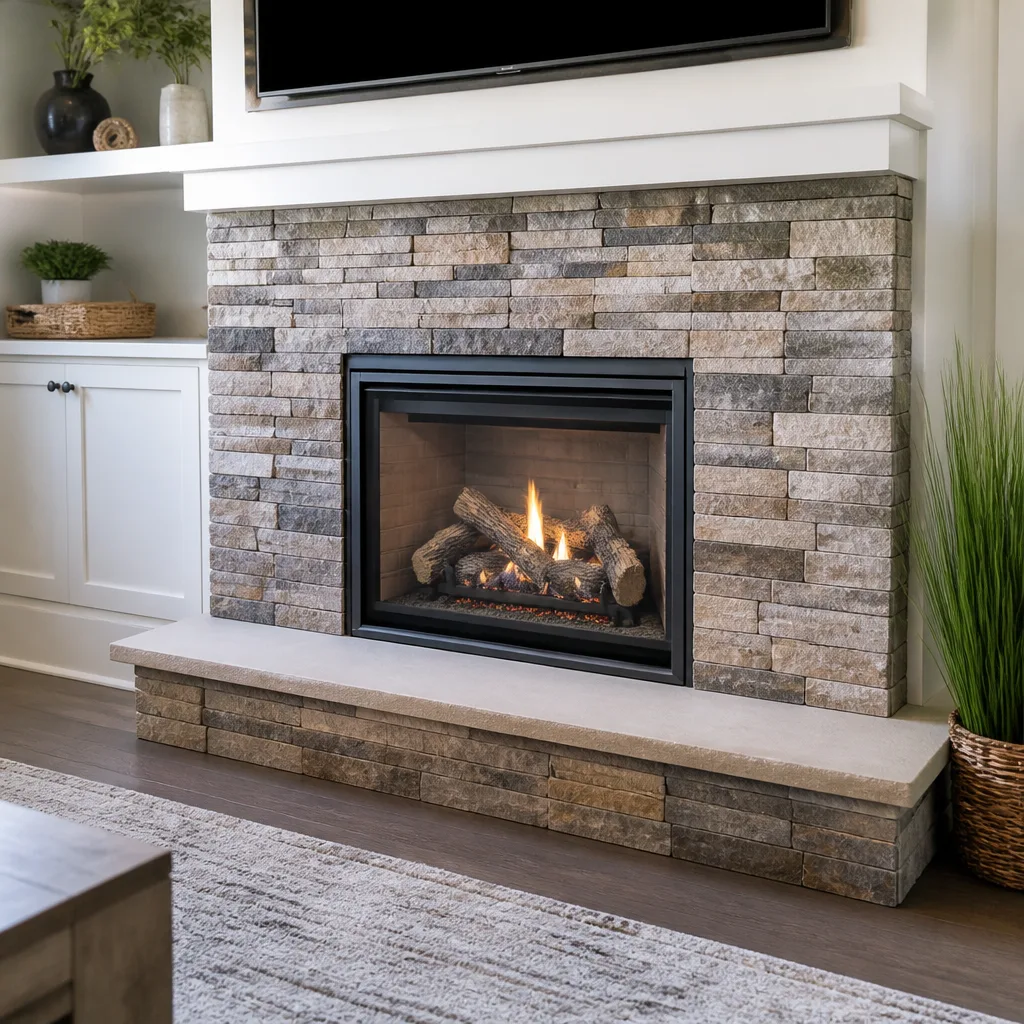 Gas fireplace service
Level 1 sweep and inspection to the NFPA 211 annual standard - flue, crown, cap, and flashing checked and photographed
Chimney sweep logs do not sweep chimneys. They loosen some creosote - which then falls where a brush and vacuum still have to collect it.
Chimney Cleaning Warning Signs: An Edmond Homeowner’s Reference Guide
Most homeowners wait for smoke in the room before they think about the chimney. By then, the problem has usually been visible for months or years. The white chalky stain on the outside of your chimney isn’t cosmetic – it’s called efflorescence, and it means water is moving through your masonry and will eventually crack the structure from the inside. It almost always shows up years before the real damage does. This guide teaches you to read your chimney the way a specialist does: the exterior signals, the fireside clues, the smells that mean different things, and the honest line between “schedule service when convenient” and “do not burn until this is checked.” If you live in Edmond and you heat with wood or gas, this is the reference you’ll come back to.
Quick Answer
The chimney warning signs that matter most are white staining on exterior brick, crumbling mortar, a cracked crown, a rusted cap, smoke rolling back into the room, blackened damper surfaces, oily wall stains near the firebox, and shaling debris in the firebox – each points to a specific diagnosable problem, not a vague one. Some mean water is getting in, some mean creosote has built up past a safe level, and some mean the flue liner has failed. The most reliable way to know which is which is a sweep plus an inspection that follows NFPA 211 categories, done by someone who can also carry the repair through. In Edmond, where summers are humid and winters swing between freezing and mild, moisture problems and creosote both show up, and they look different.
Styles & brands we work with
- Sweep & inspection
- Caps & crowns
- Flue relining
- Masonry repair
- Gas fireplace service
Table of Contents
- The Five Exterior Warning Signs You Can See From the Ground
- Interior Fireside Signals: Cleaning Problem vs. Structural Problem
- Smell as a Diagnostic Tool
- Why Some Warning Signs Only Show Up in Specific Conditions
- The Warnings That Mean Stop vs. the Warnings That Can Wait
- What Creosote Buildup Looks and Feels Like
- Wood, Weather, and the Edmond Burn Season
- When to Call a Professional
- Frequently Asked Questions
The Five Exterior Warning Signs You Can See From the Ground
Walk outside and look up. You don’t need a ladder or binoculars for most of what follows. These five signs are the ones we can teach a homeowner to spot on their own, and each one points to a fairly specific problem.
- Efflorescence. A white, powdery stain on the brick or mortar. Water is moving through the masonry, dissolving salts, and leaving them on the surface as it evaporates. It’s the first visible stage of a moisture problem. Left alone, it progresses to spalling.
- Spalling brick. The face of the brick flakes off, sometimes in thin sheets, sometimes in chunks on the ground below. Freeze-thaw cycles are the usual cause, and Edmond gets enough of them each winter to drive the process hard. Once brick spalls, that brick has to be replaced, not painted over.
- A cracked crown. The crown is the concrete cap at the very top of the chimney. If you see a crack running from the flue out to the edge, water is entering the chimney structure directly. A small hairline crack can be sealed. A crack that has opened up usually needs the crown rebuilt.
- A rusted cap. The metal cap and its screen should be rust-free and intact. Rust means moisture is sitting on it, and a damaged screen means birds, squirrels, and raccoons can get in. Caps and covers are one of the items we routinely replace with Gelco products built for weather.
- Deteriorating flashing. That’s the metal where the chimney meets the roof. If it’s lifting, cracked, or rusted through, water runs down the chimney’s outside face and gets into the roof deck. This is a roofer’s problem as much as a chimney problem, and it needs addressing before it becomes an interior leak.
On a typical Edmond brick home, we look at all five during the same walk-around. Some are cosmetic if caught early. All of them get worse with time.
Interior Fireside Signals: Cleaning Problem vs. Structural Problem
Indoors, the clues are subtler but more urgent. The key distinction is between signs that indicate a cleaning problem (creosote or soot buildup) and signs that indicate a structural problem (a failed liner, a damaged damper, a compromised smoke chamber). Cleaning problems are usually fixed with a sweep. Structural problems need the chimney repair side of the work, sometimes with a liner system.
- Smoke rolling back into the room. This is almost always a drafting problem. A partially closed damper, a blocked flue, an oversized firebox, or a negative pressure in the house can all cause it. It’s a structural and system-level issue, not just a cleaning issue.
- A blackened damper. Some soot is normal. A damper that’s uniformly black and slick with creosote usually means the chimney has been burning low and slow, cool and smoky, which deposits more creosote than a hot fire.
- Oily stains on the wall above or beside the firebox. Those are the classic sign of a chimney that’s pulled moisture into the masonry or of creosote that has migrated through the brick face. Sometimes a slowly leaking roof or flashing joint shows up the same way.
- Shaling debris in the firebox. Thin, flaky pieces of what looks like mortar or tile on the firebox floor are usually pieces of a flaking clay flue liner. This is a structural signal. A clay liner that’s shaling needs investigation before the next fire.
- A stiff or hard-to-move damper. Dampers bind when rust, creosote, or warpage has set in. A damper that suddenly feels different from how it did last season is telling you something changed over the summer.
The rule we work by: cleaning problems resolve with a sweep, structural problems resolve with a sweep plus a repair. The inspection tells you which one you’re looking at. That’s why a professional approach handles all three services together, so you’re not sent to a second contractor the moment the inspection finds something.
Smell as a Diagnostic Tool
Your nose is a surprisingly reliable instrument on a chimney. Three distinct odors correspond to three distinct problems, and recognizing which one you’re smelling saves a diagnosis step.
- Creosote odor. Sharp, tarry, sometimes like burnt wood or asphalt. It’s strongest on warm, humid days, and especially when air pressure drops before a rain. If you only smell it in summer or early fall, you’re almost certainly smelling dry creosote. That’s a sign the chimney needs sweeping before the next fire.
- Mold and moisture odor. Musty, earthy, damp-basement smell. This usually tracks back to water getting into the masonry or into the smoke chamber, and it’s often paired with efflorescence on the outside. The fix is finding and stopping the water source first, then addressing any damage it caused.
- Animal intrusion smell. Sharper, more ammonia-like, sometimes with visible droppings or nesting material near the damper or on the smoke shelf. A cap with an intact screen prevents most of this. A missing or damaged cap is an open door.
Each of these requires a different response, and none of them is solved by air fresheners or a scented candle. In our experience, homeowners who describe the smell accurately save themselves a second visit, because we can plan the right service before we arrive.
Why Some Warning Signs Only Show Up in Specific Conditions
Chimney problems aren’t always steady. Some only show up under specific conditions, and reporting those conditions accurately is one of the most useful things a homeowner can do. Here’s how to capture the pattern and pass it on.
- Humidity. Creosote odor intensifies with high humidity. Efflorescence may be invisible on a dry day and obvious after a soaking rain. Note whether a smell or stain appears in dry weather, wet weather, or both.
- Wind direction. Down-drafts happen when wind comes over the roof at a certain angle relative to the chimney’s height and the surrounding trees. Note which direction the wind was coming from when the fireplace smoked into the room. That single detail often shortens the diagnostic conversation.
- HVAC use. Running a kitchen exhaust, a bathroom fan, or a forced-air heating system can pull air out of the house and starve the fireplace of combustion air, which causes smoke rollout even when the flue is clear. Note whether the smoke shows up when the HVAC or a big exhaust fan is on.
- Temperature swing. A cold chimney drafts poorly until it warms up. If a fire smokes for the first ten minutes and then settles, that’s a warming pattern. If it smokes the whole time, that’s a different issue.
- Time of year. Chimney problems that are invisible in winter often surface in summer, when the first hot, humid day pulls out creosote odor or shows efflorescence for the first time. A spring or summer walk-around is as useful as a winter one.
Write those details down, or say them on the phone. “It smokes when the wind’s from the north and the dryer is running” is worth ten minutes of guessing.
The Warnings That Mean Stop vs. the Warnings That Can Wait
Here’s the honest triage. Not every sign means stop using the fireplace, and we won’t tell you it does. Some signs are “schedule service before the next fire.” Others genuinely mean “don’t light another fire until this is checked.” The difference matters, and it’s the part of this guide we care most about getting right.
Do not use the fireplace until it’s checked
- Shaling debris in the firebox (pieces of the flue liner on the firebox floor).
- Smoke rolling back into the room, persistently, even with the damper fully open and a warm flue.
- Visible cracks in the flue liner, or evidence of a liner that has separated.
- A cap that is missing entirely, with evidence of animal nesting in the flue.
- Any smell of natural gas near a gas-log or gas-insert appliance. That’s an emergency for your gas utility and an important reason to call us next, never on your own.
Schedule service before the next burn season
- Efflorescence on the exterior brick, without visible damage yet.
- A rusted cap with an intact screen.
- Mildly blackened damper surfaces.
- A creosote smell that only appears on warm days.
- A stiff damper.
The point of this section isn’t to alarm you. It’s to spare you the two failure modes of chimney care: waiting too long on a sign that was urgent, and paying for repair on a sign that was simply seasonal. The inspection is how we tell the two apart. Our technicians have up to 14 years of experience reading these signals in real homes, and the answer is often “sweep it now, but nothing structural needs repair.”
One safety note we take seriously. The creosote inside a chimney and any electrical or gas work around a fireplace are genuinely dangerous, and the professional step is not to open a panel, unfasten a flue, or attempt to scrape a liner yourself. Inspecting for signs is something a careful homeowner can do. Repair is a job for trained specialists, using professional-grade materials like the DuraFlex and HeatShield systems we source from trade suppliers, because a wrong material in a flue is worse than no work at all.
What Creosote Buildup Looks and Feels Like
Creosote is the central character in most chimney cleaning conversations, and homeowners deserve to know what the different degrees look like. It builds in stages, and each stage corresponds to a different cleaning approach. Here’s what you can look for from the firebox.
- Stage 1 – soot and light flake. A dusting of gray-black soot and thin, flaky creosote on the firebox walls and damper. This is normal between cleanings. A standard sweep clears it. If your flue looks like this, you’re in good shape.
- Stage 2 – crusty, brittle deposit. Flakes that cling harder and don’t brush off easily, sometimes with a slight sheen. The flue is due for a sweep now, and maybe an inspection to check for moisture involvement.
- Stage 3 – glazed, hard, tar-like. A shiny, hardened surface that’s difficult to remove and can resemble black glass. This is the dangerous stage, and it’s the one that justifies stopping the fire until it’s addressed. Removal of glazed creosote is a specialist job, and it can involve chemical treatment before mechanical cleaning.
We can’t see the flue interior from the firebox, and neither can you. That’s why the inspection matters. But the state of the firebox, damper, and smoke shelf is a fair proxy, and it tells us what to expect on the flue camera before we run it. The picture from the camera is what we base a recommendation on. Nothing gets recommended without evidence you can see for yourself.
Wood, Weather, and the Edmond Burn Season
Some of what fills a chimney with creosote comes down to what you’re burning and when, not just how often you sweep. In Edmond, that means paying attention to wood moisture and to the season’s patterns.
Wood that hasn’t had time to dry – sometimes called green wood, or wood with high moisture content – burns cooler and smokes more, and cooler smoke deposits more creosote. A chimney that ran a few hot fires on well-seasoned wood will build creosote slower than one that ran low, smoldering fires on damp wood. If you’re buying firewood in Edmond, ask when it was split. Firewood split and stacked under cover for a season is a different animal from freshly cut wood.
The other Edmond factor is the season itself. Our summers are hot and humid, which is when efflorescence and creosote odors surface. Our winters bring freeze-thaw cycles, which is when water that has been sitting in masonry does the most damage. The practical rule: do the exterior walk-around in spring and fall, and do the sweep before the first cold snap, not after. Booking before the burn season starts keeps the work off the calendar rush.
One more local note: homes here sit on a mix of clay-heavy soil and drainage patterns that vary block to block, and some chimneys take on more moisture than others simply because of how water runs off the roof. If you know your chimney leaks after a heavy rain, that’s a detail worth mentioning when you book. It changes the plan.
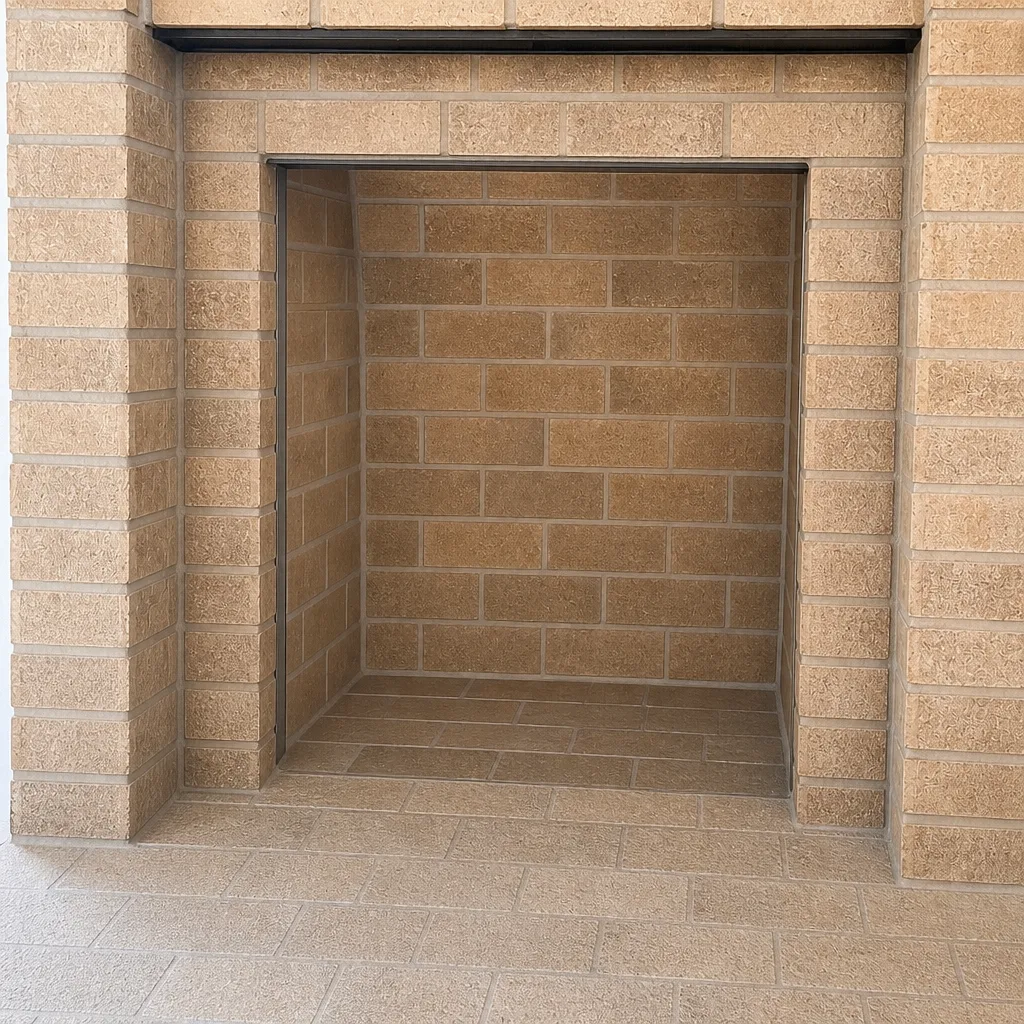
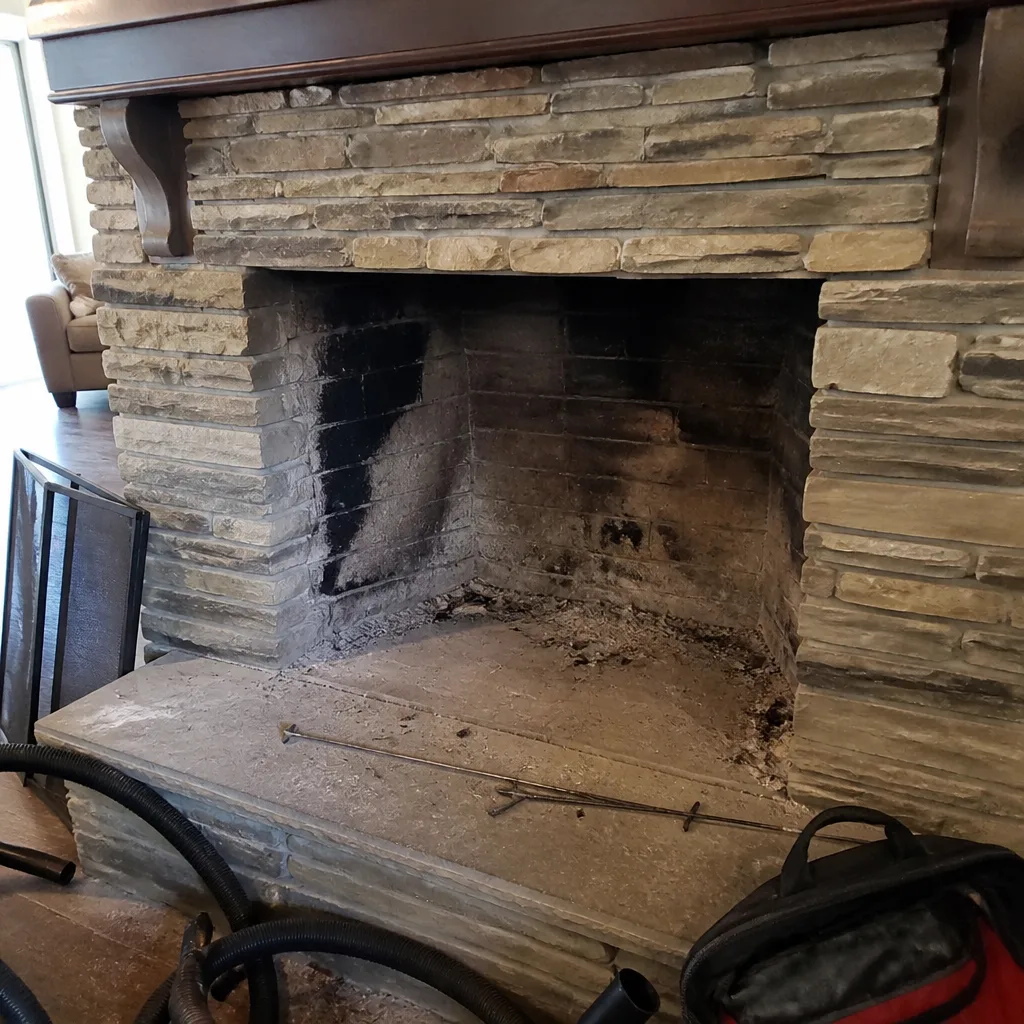
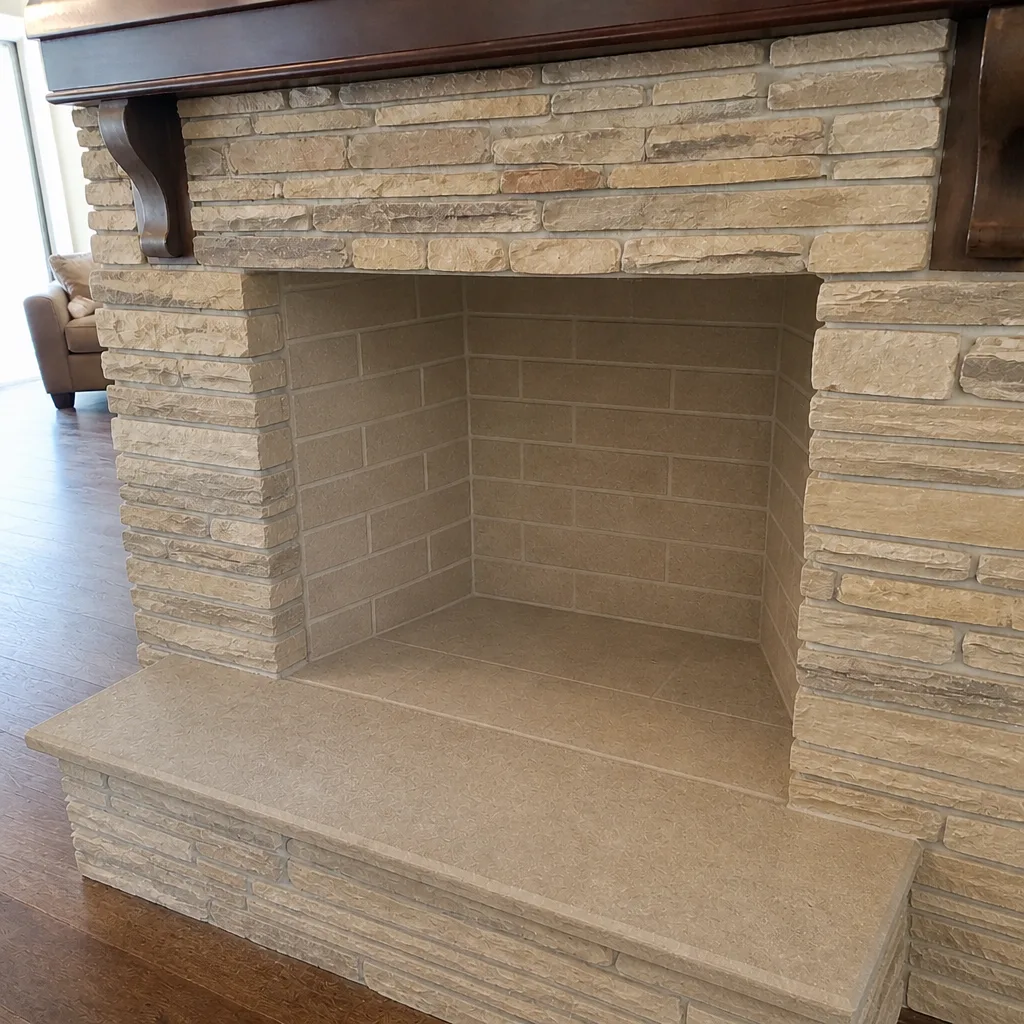
See the difference
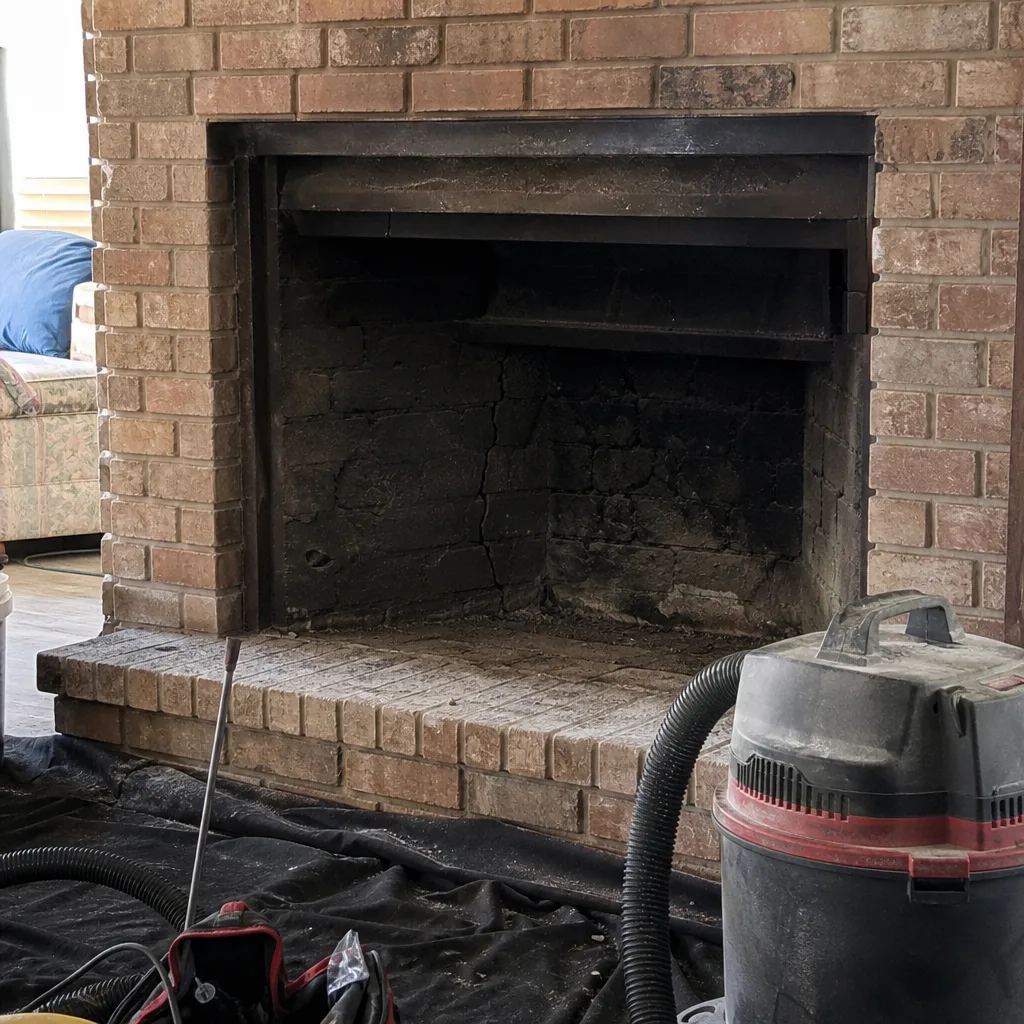 Before
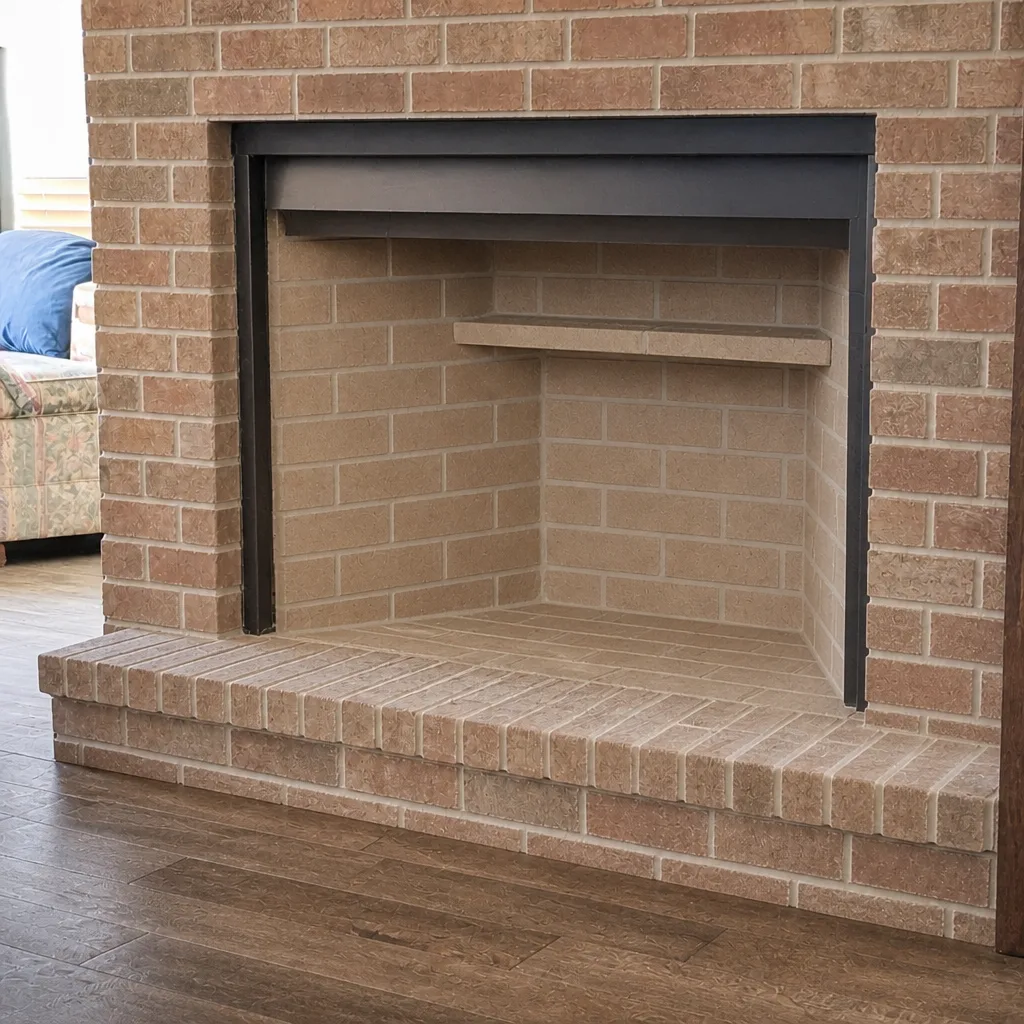 After
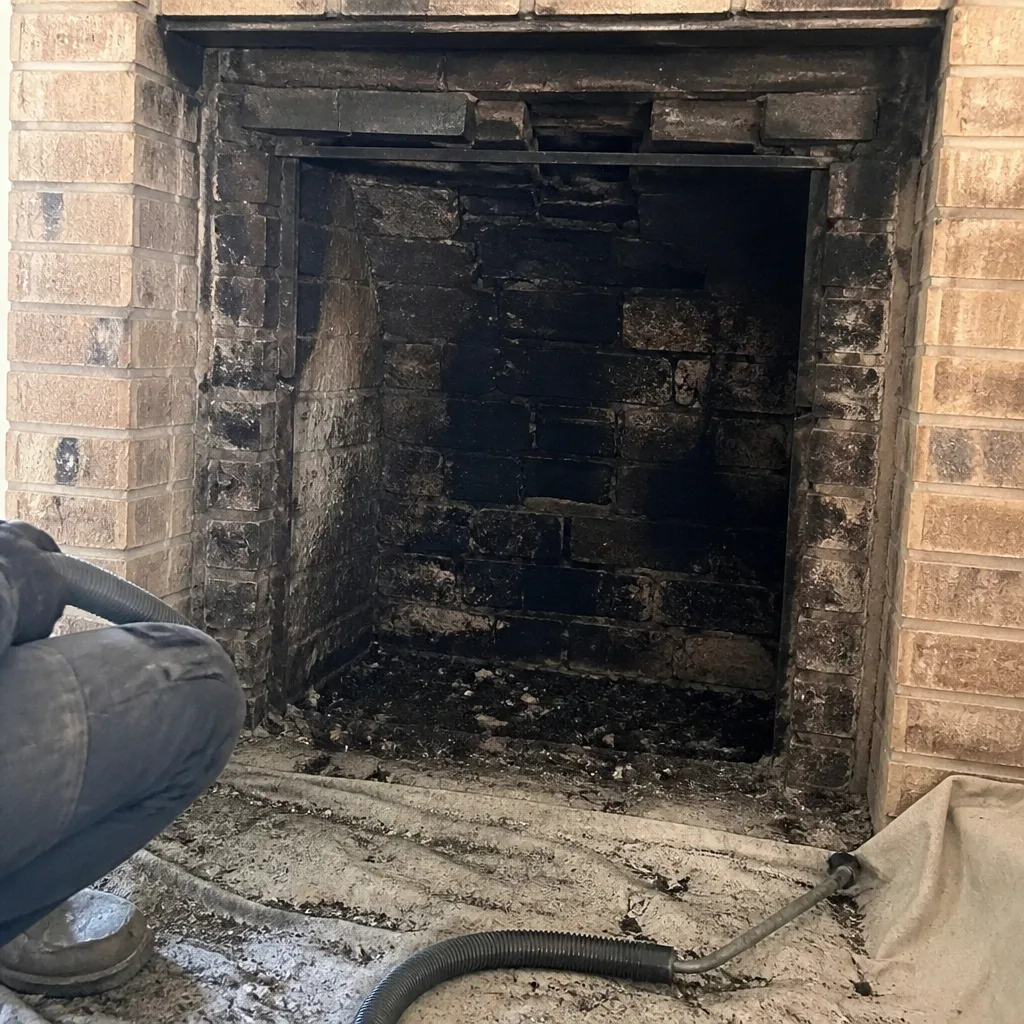 Before
 After
 Before
 After
Common Mistakes to Avoid
- Painting over efflorescence. A coat of paint traps the moisture inside the brick, and the problem spreads. The stain is the symptom, not the problem.
- Skipping the walk-around because the fireplace works fine. A chimney can draft well and still have a failing crown or a spalling brick. The exterior tells you things the fire doesn’t.
- Burning “green” or damp firewood to save time. Cooler smoke builds creosote faster, and the cleanup comes due before you planned for it.
- Ignoring a shaling firebox because it “looks like dirt.” Those flakes are often pieces of the clay flue liner, and that’s a structural signal, not a debris signal.
- Hiring whoever leaves a door-hanger coupon with a phone number that isn’t local. In Edmond, the trade suppliers we use are the ones that supply real chimney professionals, and that’s a useful filter when you’re checking who’s qualified.
- Assuming a general handyman can do chimney repair. Fixing a crown, resetting flashing, and installing a liner system are specialist work, and the materials need to be manufacturer-backed, not improvised.
- Waiting until the first smoke of the season to book a sweep. The busiest weeks are the ones right before the first cold snap. Booking earlier in the fall keeps the visit unhurried.
When to Call a Professional
Call us when any of the “do not use” signs appear, or when an “schedule service” sign has been sitting on your list for more than a season. Call when you smell creosote on a hot afternoon, when smoke rolls back into the room, or when you see white staining or crumbling brick on the stack. Call before you buy a new house or before a home inspection, so you have a report you can share with your insurer or your buyer. Call when a wood stove, gas insert, or fireplace has been sitting unused and you don’t know its history. And call us when you want a sweep, an inspection, and a repair carried through in one relationship, so you’re not sent looking for a second contractor when the inspection finds something. We work with professional brands like Olympia Chimney and Famco because a chimney repair is a specialty job, and the materials should reflect that.
Edmond Chimney Sweep offers free estimates in Edmond – call (844) 834-5906. We answer 24/7, and fast dispatch runs from 7am to 7pm, Sunday through Friday.
Frequently Asked Questions
Once a year for most homes, and more often if you burn heavily or burn wood that hasn’t fully dried. The NFPA 211 standard calls for an annual inspection, and a sweep whenever the inspection shows buildup past a safe level. If you burn a cord or more a season, plan on a sweep annually; if you burn a fire a few times a month, the inspection still belongs on the calendar every year. Call (844) 834-5906 for an exact quote – estimates are free.
That smell is almost always dry creosote and it’s a sign the chimney is due for a sweep. Warm, humid days pull the odor out of the flue, which is why it shows up in summer and early fall. It also sometimes shows up before a rain, when air pressure drops. None of that is a fire in the chimney; it’s your flue telling you it has buildup. Call (844) 834-5906 and we’ll book a sweep and inspection.
Yes, but usually a slow one. That white stain is efflorescence, and it means water is moving through the masonry and leaving salts behind. It’s rarely urgent on its own, but it’s the first visible stage of a moisture problem that leads to spalling brick and a damaged crown. Get it inspected before the next freeze-thaw season. Call (844) 834-5906 to schedule a look.
No. Reaching the flue on a steep roof is a fall hazard, and the glazed stage of creosote doesn’t come off with a homeowner brush anyway. The professional step is a camera inspection and a sweep done from the top and bottom, with the correct tools for the deposit. Sweeping a flue is not the danger – the roof and the glazed creosote are. Call (844) 834-5906 and we’ll handle it.
A cleaning is the sweep that removes soot and creosote. An inspection is the assessment of the whole system – flue liner, crown, cap, flashing, damper, firebox – and follows NFPA 211 categories so you get a documented report. Both are on the table when we visit; the sweep is what you called for, and the inspection is what tells you whether there’s more to address. Call (844) 834-5906 to book both together.
Creosote deepens from flaky to glazed, the risk of a chimney fire rises, and the cost and complexity of the eventual cleanup go up with it. Moisture damage compounds too – a small crack in the crown that would have been sealed becomes a rebuilt crown. Skipping is a loan you pay back with interest. Call (844) 834-5906 for a free estimate and get ahead of it.
The Bottom Line
Chimney cleaning warning signs are usually quiet: a white stain, a stiff damper, a smell on a hot afternoon, a few flakes on the firebox floor. Learn to read them and you’ll catch most problems while they’re still inexpensive to fix. The five exterior signs (efflorescence, spalling brick, cracked crown, rusted cap, failing flashing) are the ones you can spot from the ground. The fireside signs tell you whether you’re looking at a cleaning problem or a structural one. And the “do not use” list is short enough to memorize. In Edmond, the best time to book a sweep is before the burn season, not after the first smoke of the year. Edmond Chimney Sweep handles the sweep, the inspection, and the repair with products from DuraFlex, HeatShield, Gelco, Olympia Chimney, Famco, and Copperfield, so nothing gets referred out. Our technicians have up to 14 years of experience reading these signals, and the honest answer is often “sweep it now, nothing structural.” You can see the evidence yourself, on camera, before anything gets recommended.
Ready to get a real read on your chimney? Call (844) 834-5906 for a free estimate. We answer 24/7, fast dispatch runs from 7am to 7pm, Sunday through Friday, and the written estimate sets the final price. Whether it’s a routine sweep or a sign that’s been bothering you for a season, we carry the repair through – sweep, inspect, fix, done.
Written by the team at Edmond Chimney Sweep.