
Last updated November 16, 2026
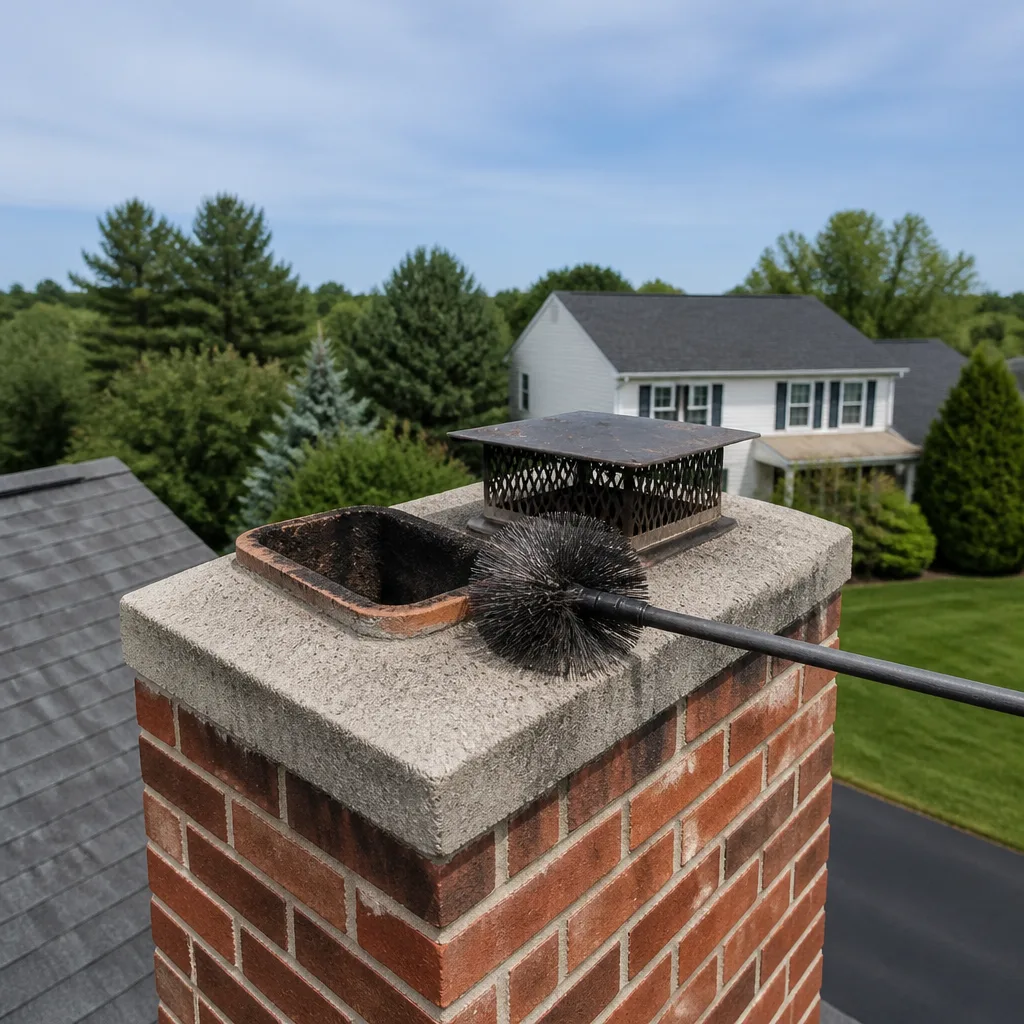 Sweep & inspection
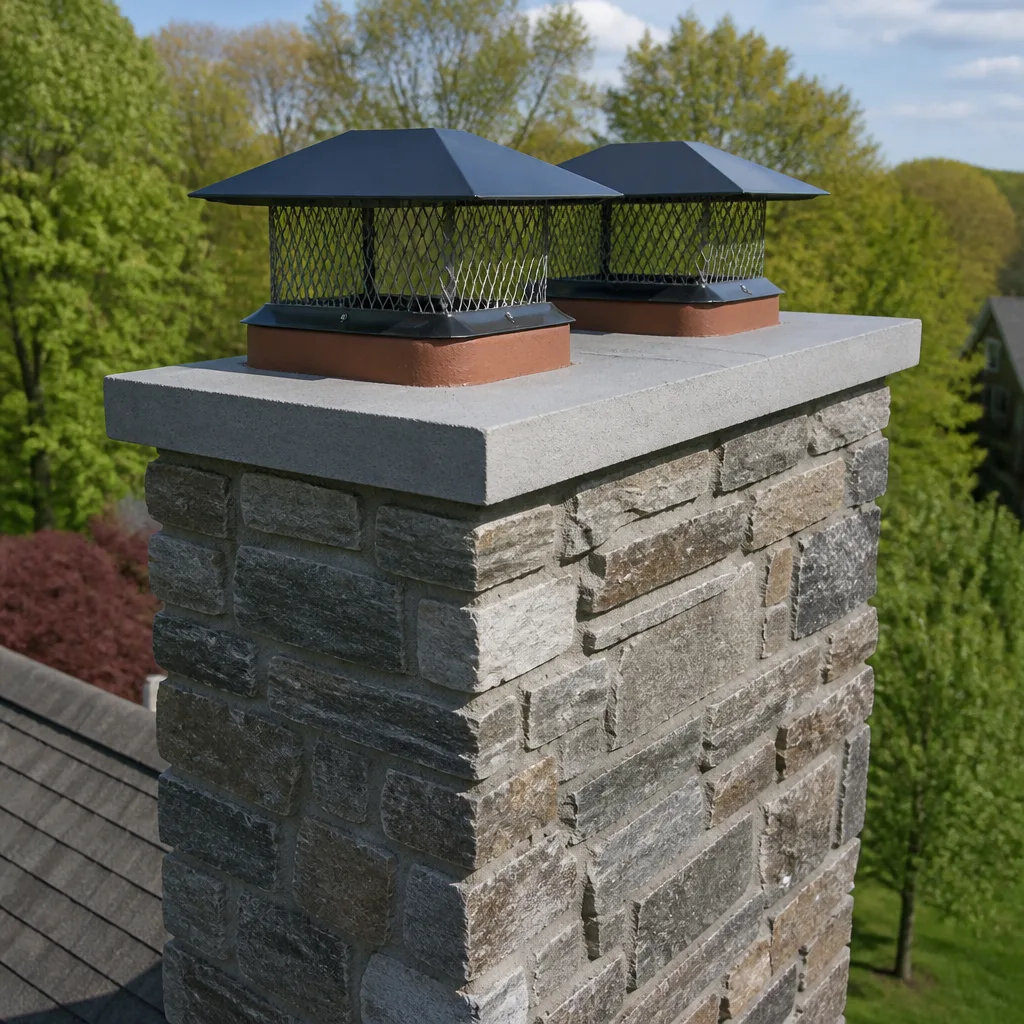 Caps & crowns
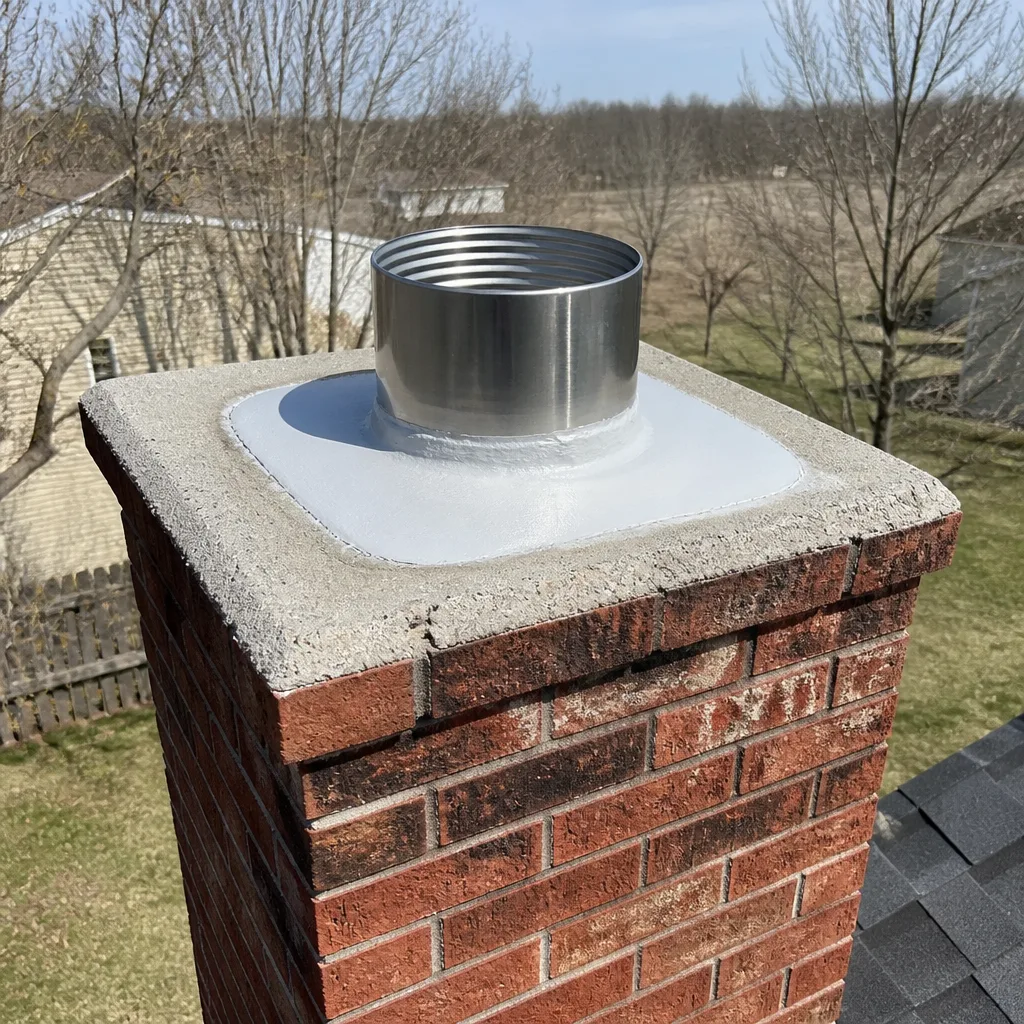 Flue relining
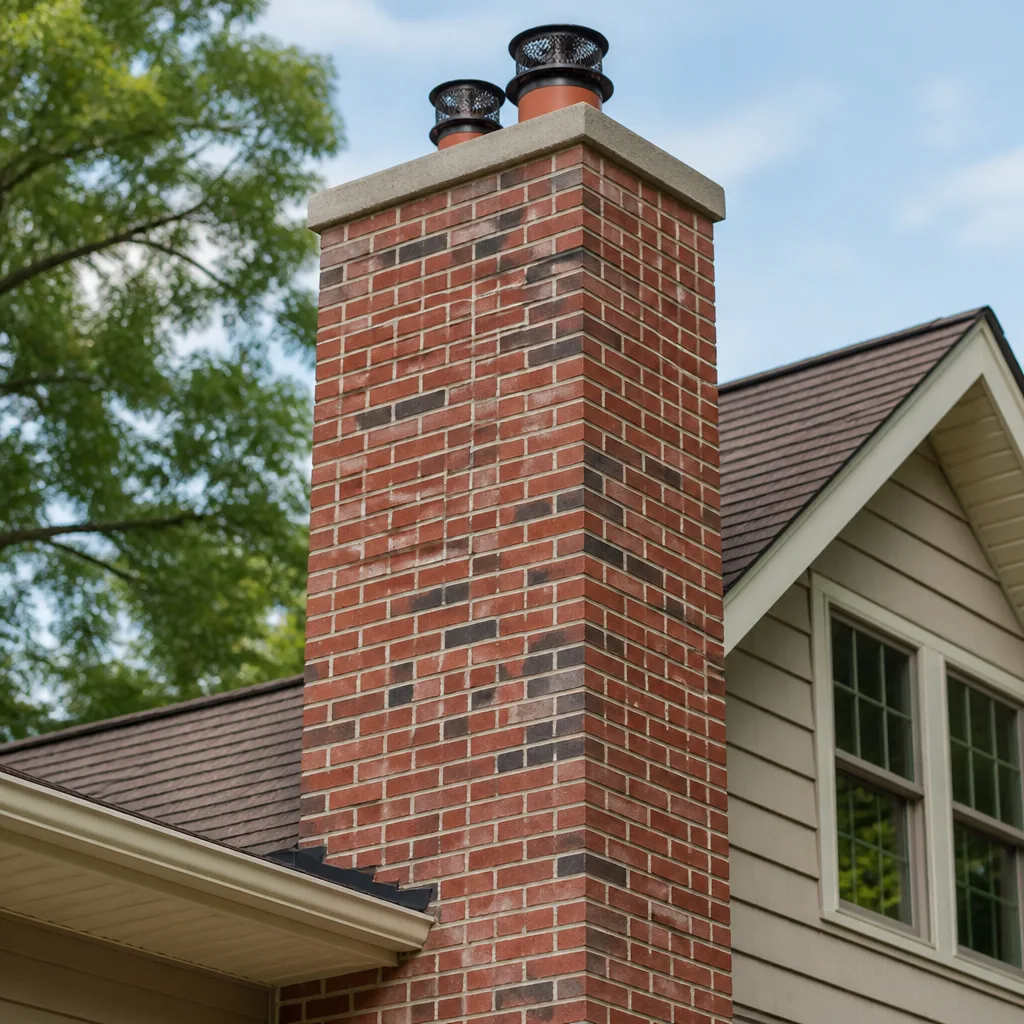 Masonry repair
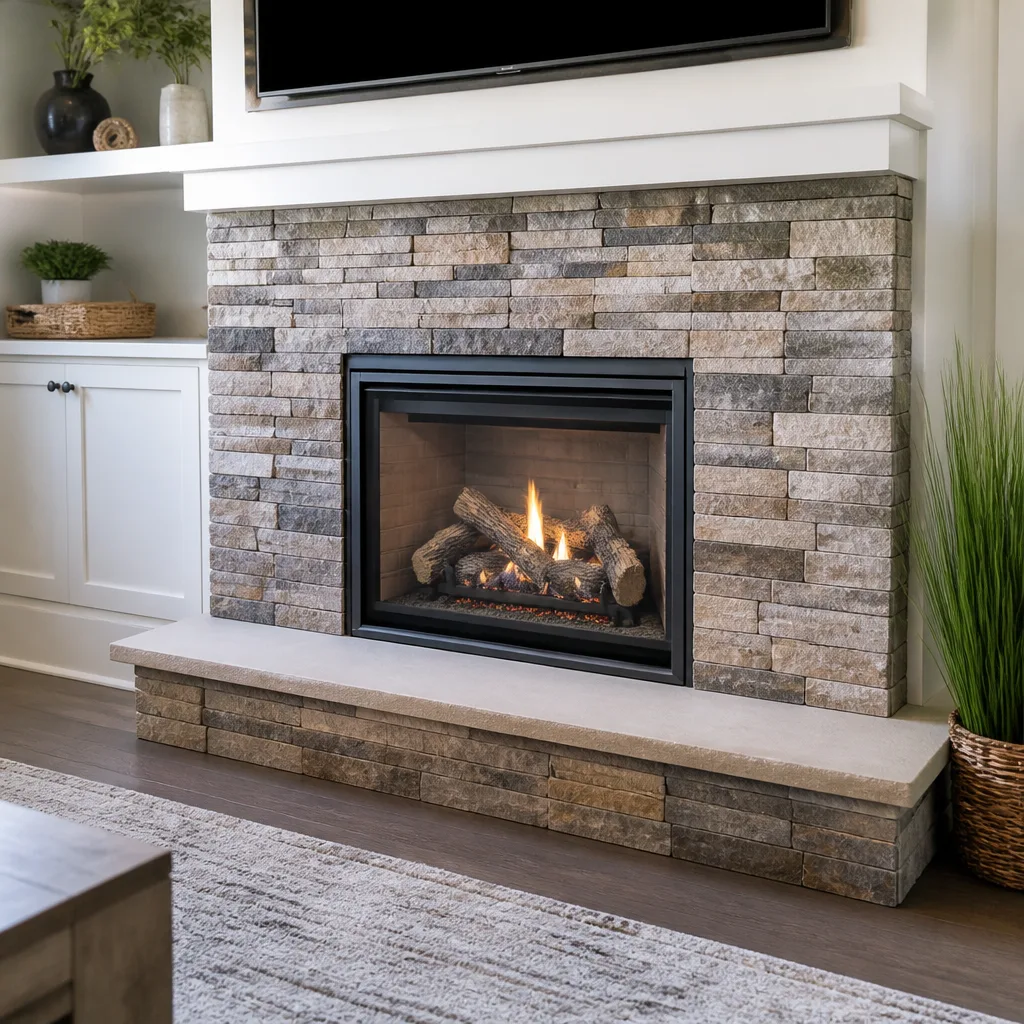 Gas fireplace service
Level 1 sweep and inspection to the NFPA 211 annual standard - flue, crown, cap, and flashing checked and photographed
Chimney sweep logs do not sweep chimneys. They loosen some creosote - which then falls where a brush and vacuum still have to collect it.
DIY vs Professional Chimney Cleaning: The Edmond Homeowner’s Decision Guide
Homeowners who sweep their own chimney often come away feeling confident the job is handled. Here’s the problem: the parts of a chimney most likely to cause a fire or a carbon monoxide issue sit above the damper, in the smoke chamber, and along the liner joints – and a standard DIY brush kit neither reaches nor inspects them. Running a brush is the easy part. Reading what you find and knowing when it’s serious is the whole job. This guide draws the line honestly: where DIY is genuinely reasonable, where it quietly creates a false sense of safety, and what a professional actually does in the same two hours. Every point is framed for homes here in Edmond.
Quick Answer
DIY chimney cleaning is physically possible and can be reasonable for a lightly used, straight flue with a clean-burning record, but it is not a substitute for a professional sweep and inspection. A brush kit cleans the flue walls; it cannot reach the smoke shelf or smoke chamber, cannot assess liner condition, and cannot document defects. In Edmond homes with a wood-burning fireplace, gas insert, or wood stove, an annual professional sweep plus an NFPA 211 inspection is the standard that keeps the chimney safe and code-compliant.
Styles & brands we work with
- Sweep & inspection
- Caps & crowns
- Flue relining
- Masonry repair
- Gas fireplace service
Table of Contents
- What a DIY chimney brush kit actually cleans
- When DIY is genuinely reasonable
- When DIY creates a false sense of safety
- How to know if your DIY cleaning was complete
- Insurance and documentation: does self-maintenance matter?
- What a professional does in the same two hours
- Edmond homes, Oklahoma weather, and creosote
- A realistic DIY-to-pro handoff checklist
What a DIY chimney brush kit actually cleans
A chimney brush is a purpose-built tool, and it does one thing well: it scrapes creosote and soot off the straight flue walls between the firebox and the top of the chimney. If you buy a kit with the right size brush and enough rod, and you work it from the roof down or the firebox up, you’ll knock loose the soft, flaky creosote that sits on the flue lining and let it fall to the smoke shelf. That is a real service, and it reduces the immediate fuel load in the flue.
What it doesn’t do is worth understanding before you decide DIY is enough.
- The smoke shelf. That ledge just above the damper traps debris, and a brush on a rod can’t angle back under it. Creosote that falls down during sweeping collects there and stays.
- The smoke chamber. This is the tapered space between the damper and the flue. Its corbeled shape and offset walls are outside a straight brush’s path, and this is where glazed creosote forms and where chimney fires often begin.
- Liner joints and condition. A brush passes over a cracked or separated liner joint without telling you anything. You can’t see the liner from inside the firebox, and you don’t inspect it by feel.
- The crown, cap, and flashing. Water entry and animal intrusion usually start here, not in the flue. A brush has nothing to say about any of it.
In short, the brush cleans the part of the system you can reach. In our experience the biggest gaps are above the damper and at the liner itself, which is exactly where the fire and carbon monoxide risks concentrate. Professional equipment uses a rotary head, drop cloths, and a camera, and the camera is what turns a cleaning into an actual assessment.
When DIY is genuinely reasonable
We’re not going to tell every homeowner that a brush should never touch their chimney. There are situations where a competent, careful homeowner can do meaningful work with a DIY kit, and calling those out honestly is more useful than a blanket “hire a pro.”
DIY is reasonable when most or all of the following are true:
- The chimney serves a wood-burning fireplace or stove that sees light use, and you burn well-seasoned hardwood, not green wood or trash.
- The flue is straight, unobstructed, and easy to reach from the roof with proper ladders and fall protection.
- You’ve had a professional inspection recently that found no liner damage, no glazed creosote, and no smoke chamber problems.
- You’re clearing a light layer of soot and ash between professional sweeps, not trying to fix a known problem.
- You’re physically able to work at height safely, or from the firebox up with the right rods and drop cloths.
Even in those cases, the DIY sweep works best as maintenance between professional visits, not as the whole program. A professional chimney sweep brings an inspection to every job; a homeowner with a brush brings only the brush. The value of a scheduled sweep is the assessment as much as the cleaning, and a home in Edmond with a wood-burning appliance should have that assessment on a regular rhythm.
The seasonal timing matters more than the technique
In Edmond, the practical reason to book a sweep is seasonal: you want the chimney clean and inspected before the burning season starts, not after the first cold snap. Roof work, sweep bookings, and repair scheduling all crowd into the same few weeks, so planning ahead is the real trick. A DIY sweep done in October is fine maintenance; the inspection that comes with a professional sweep catches what the October brush missed.
When DIY creates a false sense of safety
The risk with DIY isn’t usually the brush falling down the chimney. It’s the confidence that follows a clean-looking flue. When a homeowner sweeps, sees a tidy firebox afterward, and concludes the chimney is fine, they may be skipping the only check that would catch a cracked liner or a creosote-glazed smoke chamber. That is the scenario that worries us most.
DIY crosses into unsafe territory when any of these are present:
- You’ve had a chimney fire, even a small one. A chimney fire can crack the liner, loosen joints, and damage the smoke chamber. The fire doesn’t need to be dramatic to do this damage, and a brush kit cannot tell you whether it happened.
- You see glazed or tar-like creosote. Hard, shiny, bubbly creosote is the third degree of creosote, and it doesn’t come off with a hand brush. It needs professional removal, and sometimes liner or smoke chamber repair.
- Your wood stove or insert is newer or higher-efficiency. These appliances run hotter flue temperatures and are more sensitive to draft and liner condition. A DIY sweep that misses a liner problem puts the appliance at risk.
- You smell smoke in the house when the fireplace isn’t running, or you get backdraft. That points to a draft or blockage issue that has nothing to do with soot on the walls.
- You have a gas appliance or insert. Gas appliances still need sweeping and inspection, and carbon monoxide risk is real. This is not a DIY category.
We never want anyone to run a brush and mistake a clean firebox for a safe system. If any of these apply, book a professional. A trained technician inspecting an unsafe chimney is far cheaper than the repair after a fire, and we say that with 14 years of technician experience behind it, not scare tactics.
How to know if your DIY cleaning was complete
You can check your own work, but you have to check the right things. After a DIY sweep, put a flashlight into the firebox and look up. Then get on the roof and look down. The clues below tell you whether the job was done or whether you need to stop and call.
Signs the sweep worked
- The flue walls look mostly dark and sooty but not crusty or shiny.
- Any loose creosote has dropped down and been removed, not left sitting on the smoke shelf.
- You see no visible cracking, separation, or shifting at liner joints from above or below.
- The chimney draws normally when you test a small fire, with no smoke rolling into the room.
Signs the sweep fell short or something is wrong
- Soot or creosote still stuck to the flue walls after two passes, especially in patches.
- A shiny, glazed, or bubbly coating anywhere in the flue or smoke chamber.
- Debris still visible on the smoke shelf – a straight brush usually can’t reach it, and it needs clearing by hand with the right tools.
- Any visible crack, gap, missing chunk, or spalling in the liner.
- A persistent smoky smell or poor draft after cleaning.
If any of the second list is true, you’re past the DIY line. A professional inspection will tell you whether you’re looking at routine maintenance or a repair. This is exactly the situation that calls for a chimney repair assessment rather than another brush pass.
Insurance and documentation: does self-maintenance matter?
We get this question often, and the honest answer is that it depends on your policy and your insurer, so we won’t invent a rule that doesn’t exist. Two things are generally true across homeowners policies: insurers care about how you maintain the systems in your home, and having a record of professional service is easier to produce in a claim than describing your own maintenance routine.
Here’s how to think about it without overstating it:
- Keep a DIY log. Date, what you did, what you saw. It’s better than nothing, and it shows a maintenance habit.
- Ask your agent directly. If a chimney fire were to occur, would your policy require documented professional service? The answer varies. Ask before you need to know.
- Get the inspection in writing. A professional inspection gives you a documented condition report you can share with your insurer or a home buyer. That’s a concrete asset a DIY log can’t match.
- Home sales and refinancing. If you sell or refinance an Edmond home with a solid-fuel appliance, a recent professional inspection report is often requested. It’s easier to have it on file than to scramble for it during a closing.
We don’t claim to know what every Edmond insurer will do. We do know that documented maintenance is a practical benefit of professional service, and it’s one more reason the annual sweep and inspection earns its keep. Our inspections follow NFPA 211 inspection categories so the documentation you get is standard and shareable.
What a professional does in the same two hours
If you spend two hours sweeping a chimney yourself, and a professional spends two hours on the same chimney, you’re not doing the same job. The professional’s two hours cover four things a homeowner with a kit cannot replicate on their own.
- A proper sweep with the right head and containment. Rotary rods and the right brush size clean more thoroughly than a hand kit, and drop cloths and a HEPA vacuum keep the house clean.
- A camera inspection. A technician runs a camera up the flue and looks at the smoke chamber, the liner joints, the crown, and the cap. This is where defects get seen rather than assumed.
- Written defect documentation. Problems get recorded with photos you can share with your insurer or a buyer, so there’s a record of condition, not just a memory of what you saw.
- On-the-spot repair capacity. If the inspection finds a deteriorated liner or a rough smoke chamber, a specialist can often repair it in the same relationship rather than referring it out. We resurface smoke chambers and liners with HeatShield, reline with DuraFlex flexible liner systems, and fit caps and venting from Gelco and Olympia Chimney. That’s one call for cleaning, assessment, and repair, and it’s the difference between a generalist with a brush and a specialist who works the whole system.
A clean chimney is the starting point, not the finish line. In our experience the homeowner who learns the most from a professional sweep is often the one who swept the chimney themselves for years and finds out during inspection that the liner was deteriorating the whole time. That’s not a knock on the homeowner – it’s just that the brush doesn’t tell you what the camera does.
Edmond homes, Oklahoma weather, and creosote
Chimney behavior is partly a climate question, and Edmond’s pattern matters. The home-heating season here swings broadly: mild stretches where the fireplace runs a small fire, followed by hard cold snaps that push a hot fire for days. That on-and-off pattern is tough on a chimney. Cool, slow, smoldering fires produce more creosote than hot ones, and the starts and stops of a variable Oklahoma winter tend to produce more of them than a long steady burn would.
A few local realities worth factoring into how you maintain a chimney in Edmond:
- Seasonal temperature swings drive creosote formation. The shoulder-season fires, when the house is cool but not cold, run at lower flue temperatures and leave more deposits. Those deposits are also easier to clean than glazed creosote, which is why the timing of a sweep matters.
- Wood choice is in the homeowner’s hands. Seasoned hardwood burned hot produces less creosote; green or unseasoned wood produces more. This is the single most controllable factor in how fast a flue needs cleaning.
- The freeze-thaw cycle is hard on masonry. Water that gets into a crown or around a cap, freezes, and expands can crack masonry over time. A cap that’s missing or damaged is a bigger deal in Edmond than it might be in a milder climate, and a Gelco or Olympia Chimney cap is a small fix that prevents a bigger one.
- Storms bring debris and animal intrusion. Wind, rain, and nesting birds all use the chimney. A professional inspection is the easiest way to know if something has found its way in.
None of this means Edmond chimneys are uniquely dangerous. It means the maintenance rhythm has to fit the local weather pattern, and the season you book a professional sweep and inspection should happen before the burning season, not in the middle of it. If you’re scheduling around the fireplace in an Edmond home, plan on getting it done in late summer or early fall while dates are still open. More on the seasonal approach lives on our main Edmond Chimney Sweep page.
A realistic DIY-to-pro handoff checklist
If you’re on the fence, work through this in order. It’s a decision process, not a set of sweeping instructions, and it’s designed to tell you honestly whether to pick up the brush or make a call.
- Check your service record. When was the last professional inspection? If it wasn’t in the last 12 months, the answer is a call, not a brush.
- Look up the flue with a strong flashlight. Light, sooty walls are one thing; shiny, glazed, or crusty walls are another. Glazed creosote means a professional sweep.
- Check the smoke shelf and chamber for debris. If you can see debris sitting above the damper and can’t reach it safely, a professional sweep will clear it and inspect the area.
- Check the crown and cap from the ground with binoculars, or from the roof only if you can do so safely. Missing caps, cracked crowns, and rusted or damaged components are professional repairs.
- Note anything unusual in performance. Smoke backdraft, a smoky smell when the fireplace is off, or hard-to-light fires all point to a draft or blockage issue that needs inspection.
- If conditions are clean and clear, a DIY sweep is reasonable maintenance between professional visits. If anything is uncertain, book the professional sweep and inspection.
Whichever way the checklist goes, the annual professional sweep and inspection is the backbone of chimney maintenance. DIY can supplement it. It can’t replace it.
Common Mistakes to Avoid
- Treating a clean firebox as proof the chimney is safe. A tidy firebox just means the visible ash is gone. The liner and smoke chamber are the parts that matter, and neither shows up in a quick look from the hearth.
- Skipping inspection because you swept the flue yourself. Cleaning and inspection are two different jobs. A brush tells you soot is gone; it doesn’t tell you whether the liner is cracked or the smoke chamber is glazed.
- Burning wet or green wood to save money. In Edmond’s variable winter, low-temperature fires produce more creosote, and more creosote means more frequent cleaning and higher risk. Seasoned hardwood is the cheaper habit over a season.
- Assuming a gas insert doesn’t need sweeping. Gas appliances deposit soot and still need inspection for carbon monoxide risk. Don’t skip the annual service just because there’s no wood fire.
- Letting a missing or damaged cap go unfixed. Water and animals enter through the top, and a cracked crown compounds with every freeze in Edmond. A cap is one of the least expensive repairs that prevents a bigger one.
- Ignoring glazed creosote because the brush didn’t remove it. Glazed, bubbly creosote is beyond household brushing and needs professional removal. Leaving it in place increases fire risk.
- Using a chimney brush on a manufactured or lined system without knowing the liner type. Some liners require particular brush materials and techniques. Forcing the wrong brush or rod can damage the liner.
See the difference
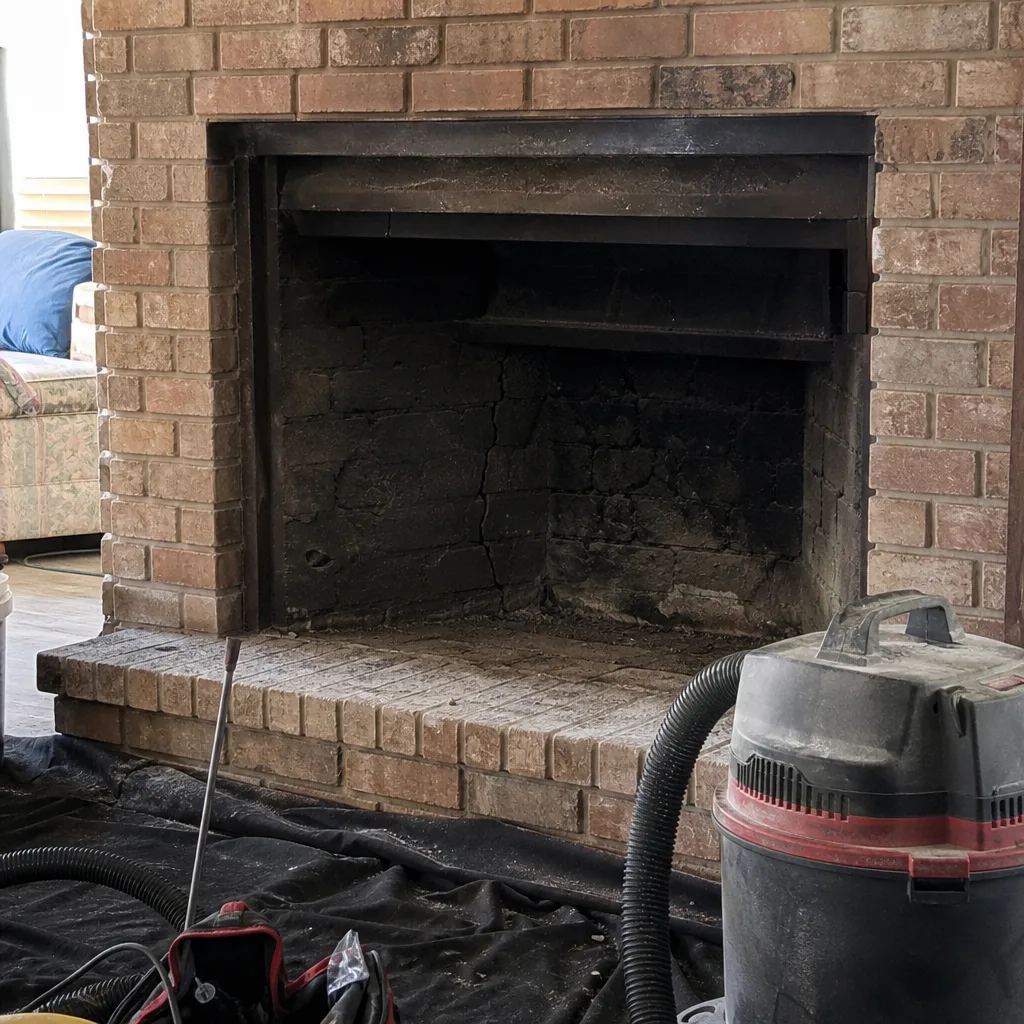 Before
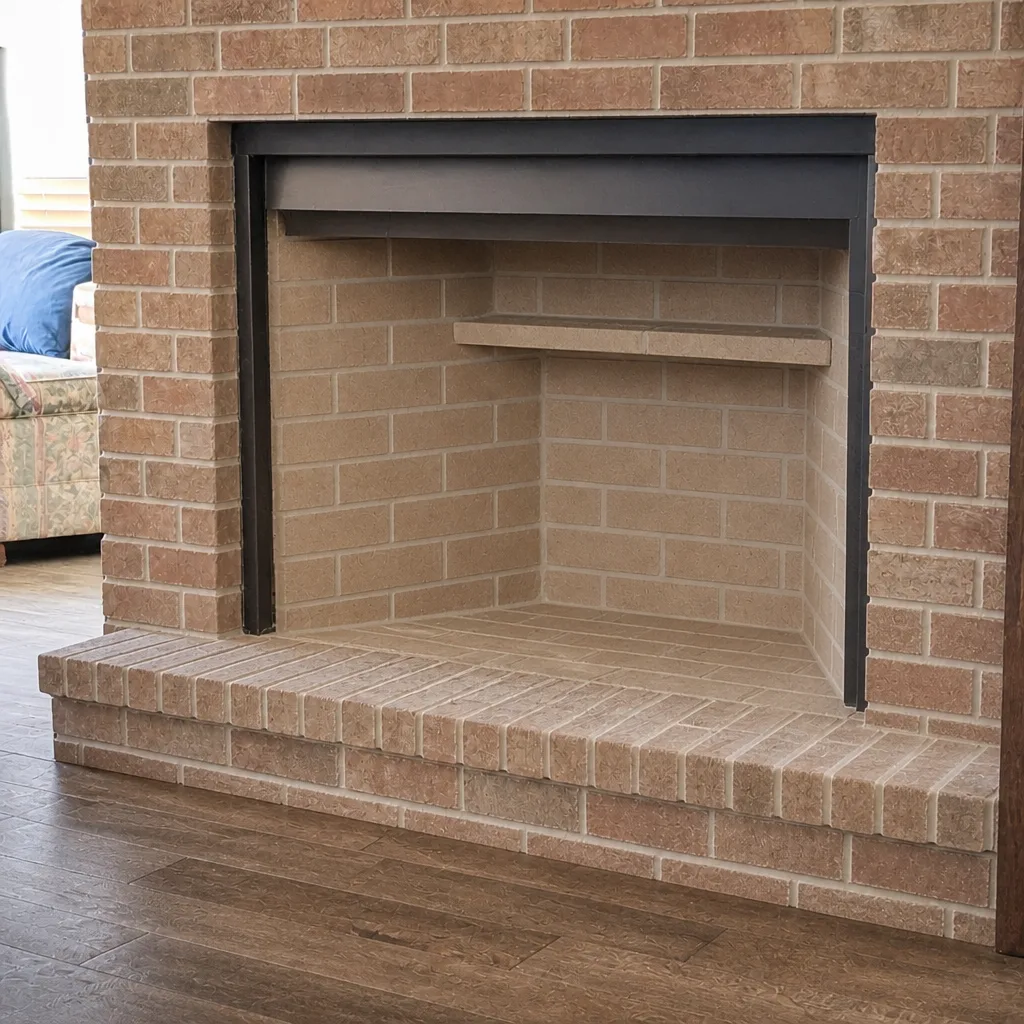 After
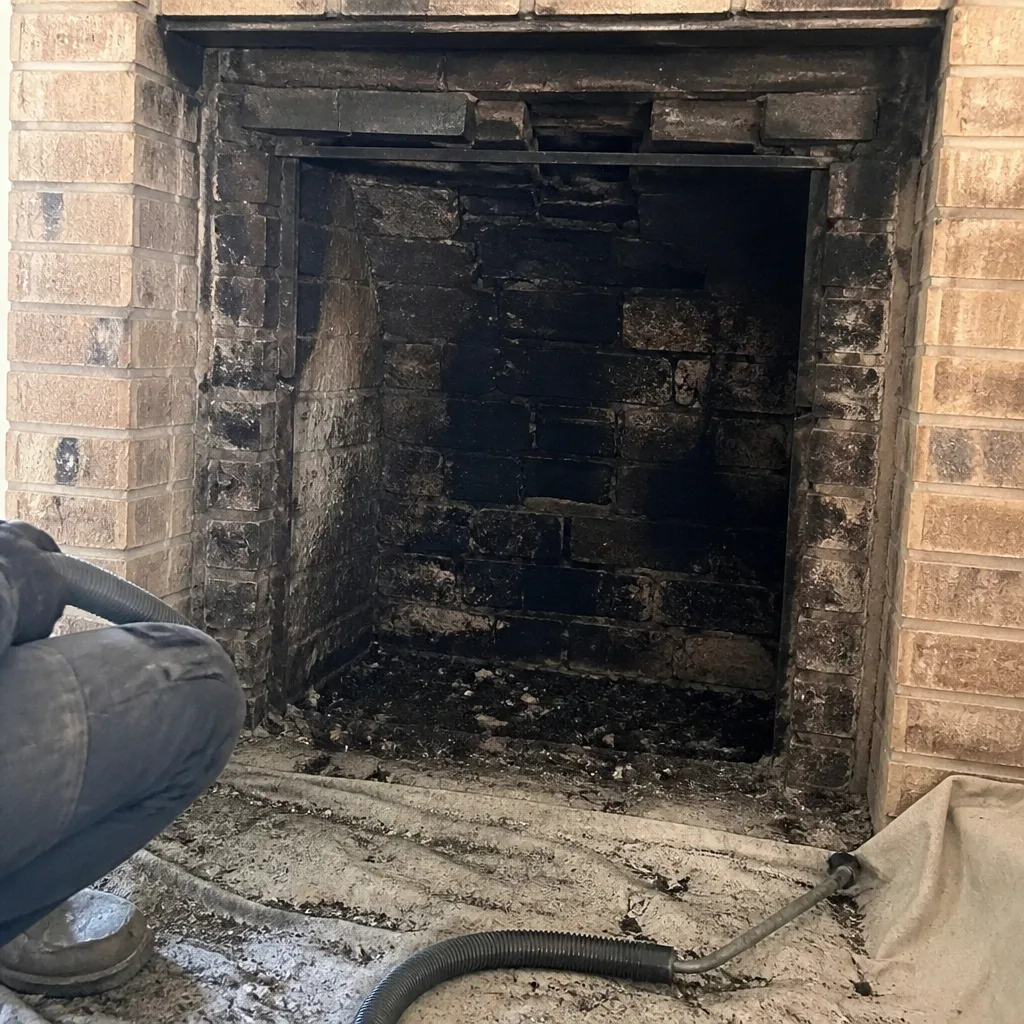 Before
 After
 Before
 After
When to Call a Professional
Call a professional whenever the chimney hasn’t been inspected in the last year, whenever you see glazed creosote, whenever there’s been any chimney fire, whenever you notice smoke or backdraft, and whenever the chimney serves a gas appliance. Call if you’re unsure whether the liner is sound, and call before you sell or refinance an Edmond home with a solid-fuel appliance. Call when a cap or crown is damaged, and call whenever something has clearly gotten into the chimney. Edmond Chimney Sweep offers free estimates in Edmond – call (844) 834-5906. We answer 24/7, and fast dispatch runs from 7am to 7pm, Sunday through Friday. A professional sweep and inspection costs far less than the repair that follows an ignored defect.
Frequently Asked Questions
Yes, a homeowner can clean the visible flue walls with a brush kit, and that’s reasonable maintenance between professional sweeps. What a DIY sweep cannot do is inspect the smoke chamber, check liner joints, or document the chimney’s condition, so it should never replace the annual professional sweep and inspection.
Most Edmond homes with a wood-burning fireplace should have the chimney swept and inspected once a year, ideally before the burning season. If you burn heavily, burn unseasoned wood, or use a wood stove or insert, you may need more frequent sweeps. A professional inspection will tell you the actual pace your chimney needs.
Yes, if it’s been a year or more since the last inspection. Sweeping and inspection are separate jobs, and a brush can’t see a cracked liner or a glazed smoke chamber. Our inspections follow NFPA 211 categories so you get a documented condition report you can share with an insurer or a buyer. Call (844) 834-5906 for a free estimate.
A brush kit cleans soot and soft creosote off the straight flue walls. It doesn’t reach the smoke shelf or smoke chamber, and it doesn’t inspect the liner. Those are the places where chimney fires and carbon monoxide issues most often start, and they’re the reason a professional sweep and inspection is worth scheduling.
Skipping inspection means defects go unseen. A cracked liner, glazed creosote, or a rough smoke chamber can escalate over a season or two, and damage discovered late is more expensive to fix. A professional inspection is the cheapest way to know the true condition of the chimney before a repair becomes urgent.
Yes, but it does a different job. A professional sweep includes inspection and documentation, and if a defect turns up, repair capacity is in the same visit. The written estimate sets the final price per job, and estimates are free – call (844) 834-5906.
The Bottom Line
DIY chimney cleaning is honest maintenance for a lightly used, healthy chimney between professional visits. It is not a substitute for the annual sweep and inspection, because the parts of a chimney most likely to cause a fire or a carbon monoxide issue – the smoke chamber and the liner joints – sit outside a brush kit’s reach. If you sweep your own chimney, keep a log, watch for glazed creosote and damaged caps, and book a professional inspection every year. In Edmond, the right relationship is a specialist who cleans the system, inspects it, and carries the repair through when something turns up. Trusted brands, applied by specialists who know how they perform in real chimneys, are what you get when you book with us.
Call Edmond Chimney Sweep at (844) 834-5906 for a free estimate. We answer 24/7, and fast dispatch from 7am to 7pm runs Sunday through Friday.
Written by the team at Edmond Chimney Sweep.