
Last updated November 16, 2026
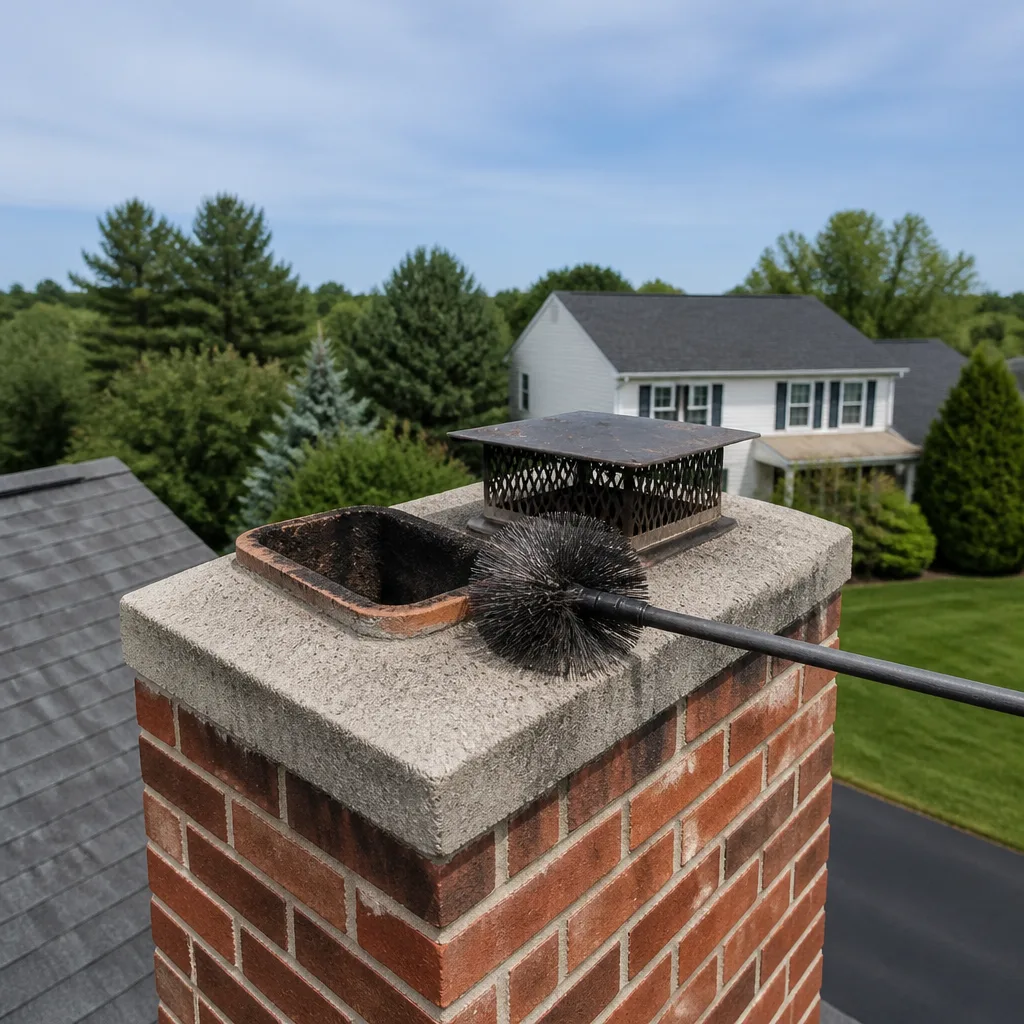 Sweep & inspection
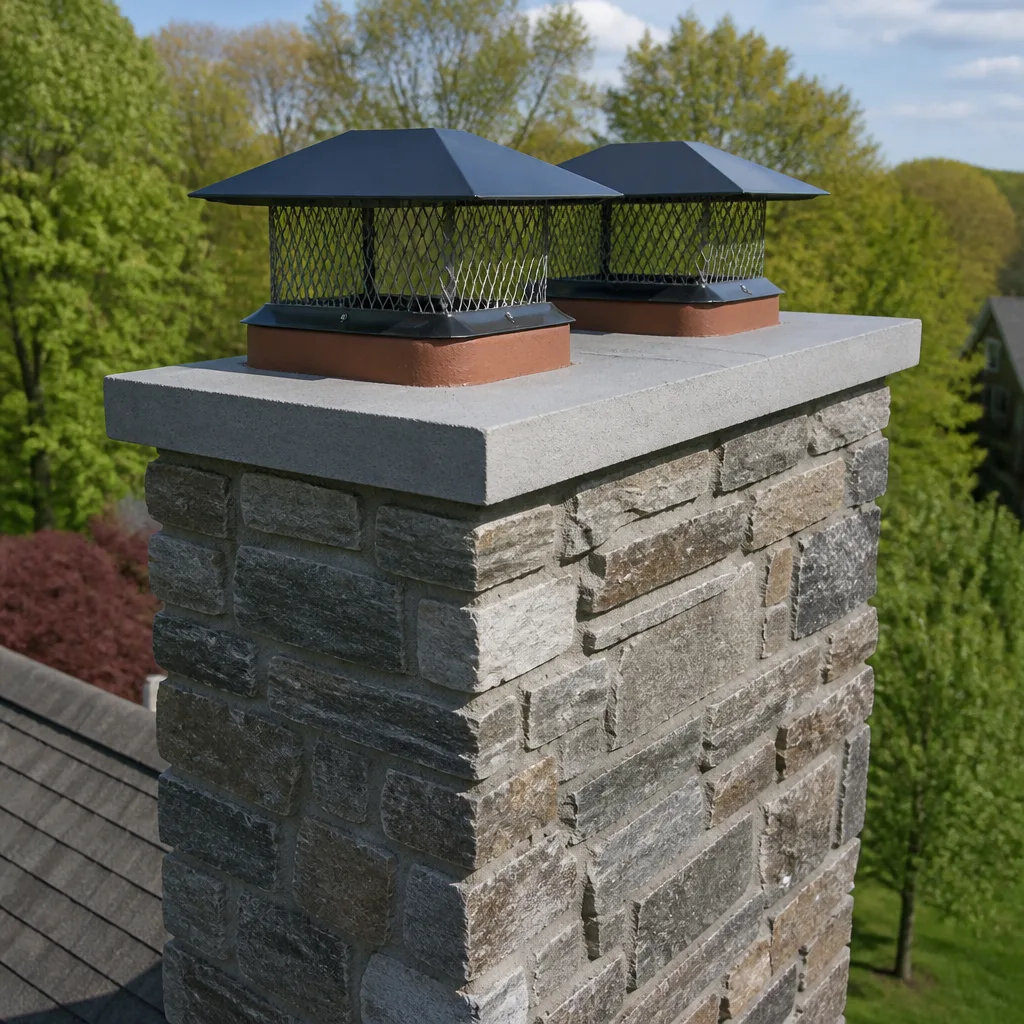 Caps & crowns
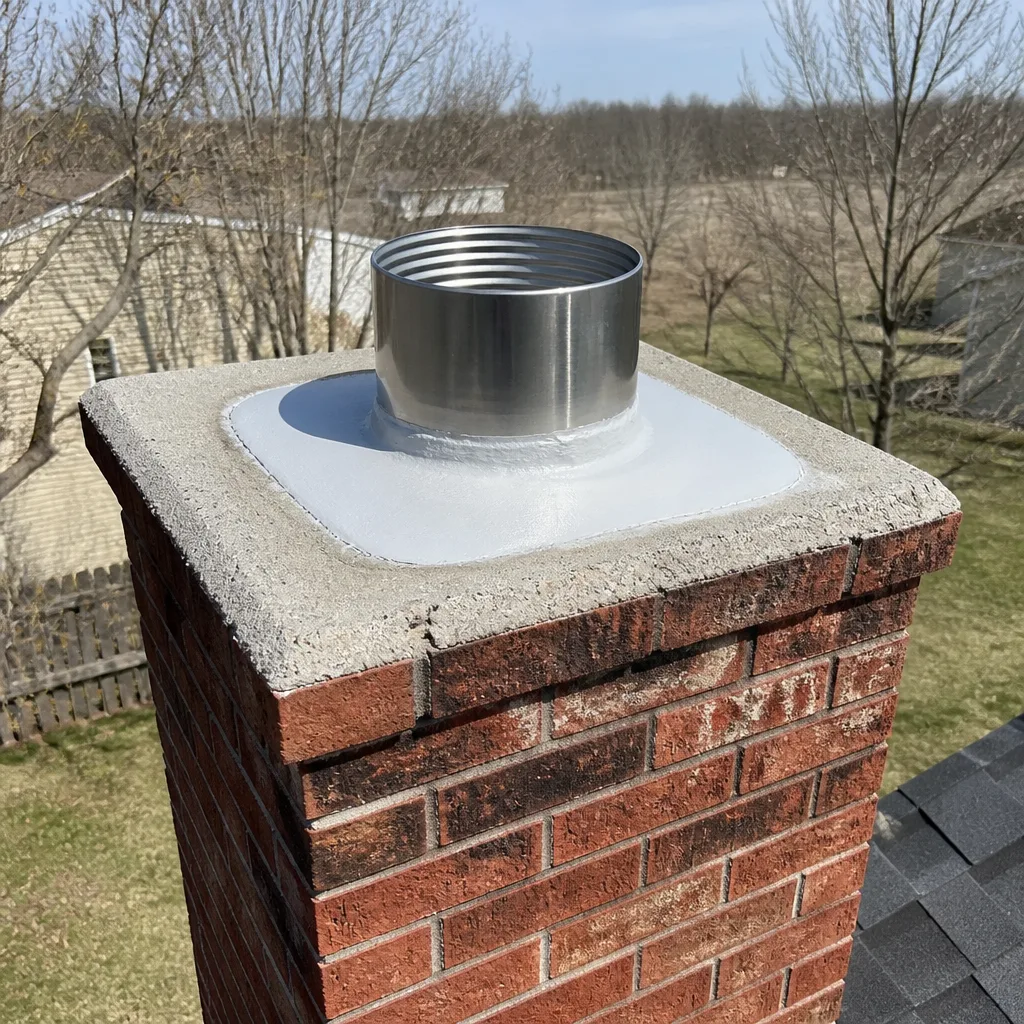 Flue relining
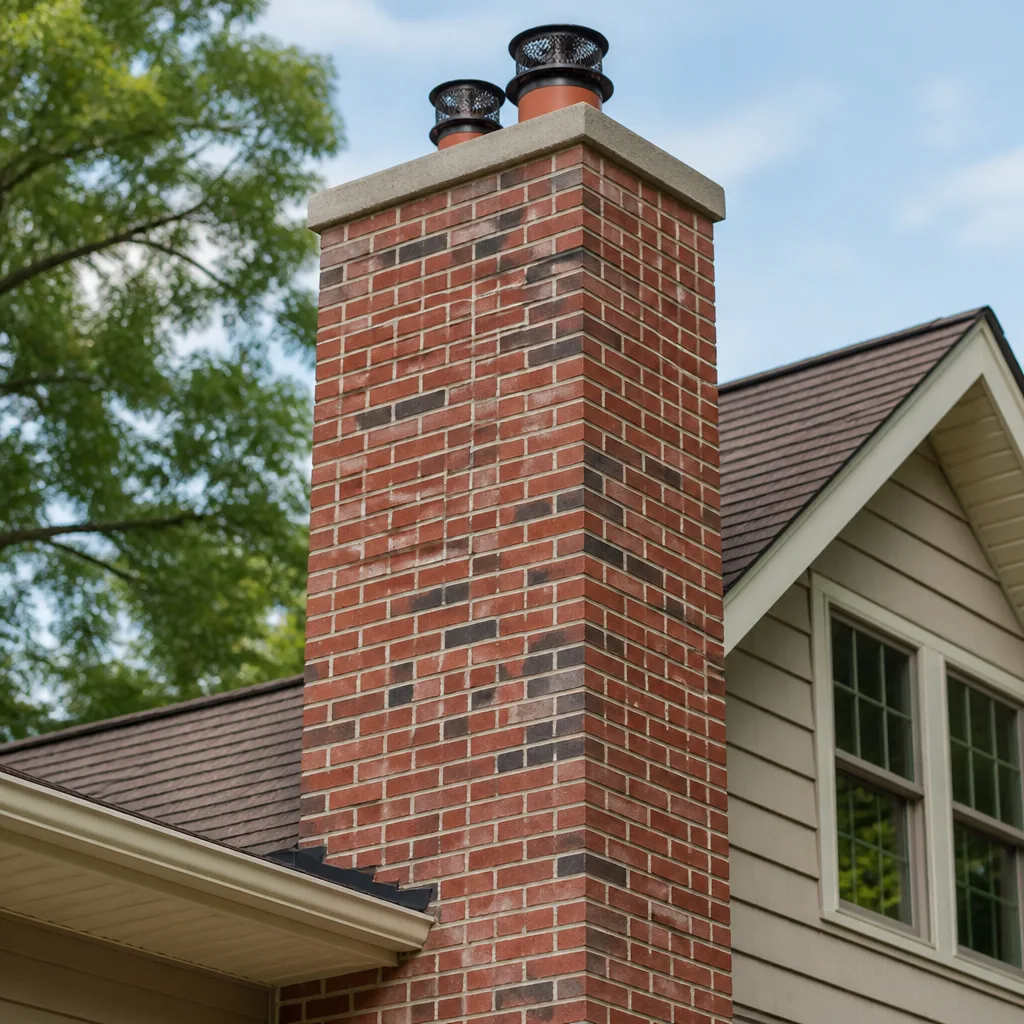 Masonry repair
 Gas fireplace service
Level 1 sweep and inspection to the NFPA 211 annual standard - flue, crown, cap, and flashing checked and photographed
Chimney sweep logs do not sweep chimneys. They loosen some creosote - which then falls where a brush and vacuum still have to collect it.
The Complete Guide to Chimney Cleaning in Edmond
Most chimney fires don’t start because a homeowner skipped a cleaning. They start because the cleaning stopped at the flue. A brush run up and down the flue leaves soot behind on the smoke shelf, the damper frame, and the joints where the firebox meets the surround – and those are exactly the places creosote pools and then ignites. In Edmond, there’s a second layer to this that generic cleaning guides never touch: the clay soil under your house shifts through wet and dry cycles, and that movement can crack a firebox from below without putting a single mark on the flue. This guide maps the whole chimney system, not just the part a brush can reach. You’ll learn how Oklahoma’s soil and burning habits drive buildup, which inspection level your situation calls for, and what a real full-service sweep does differently when a problem turns up mid-job.
Quick Answer
Chimney cleaning in Edmond means more than brushing the flue. A proper service sweeps the full firebox, smoke chamber, smoke shelf, and damper area, then inspects the liner and firebox joints for the cracks that Edmond’s clay-soil movement and freeze-thaw cycles tend to cause. Plan on one cleaning a year if you burn regularly, and pair it with an inspection so the parts a brush can’t reach actually get looked at. A clean chimney is the starting point. A safe chimney is the goal.
Styles & brands we work with
- Sweep & inspection
- Caps & crowns
- Flue relining
- Masonry repair
- Gas fireplace service
Table of Contents
- Why Chimney Cleaning in Edmond Is Different
- How Edmond’s Red Clay Soil Affects Your Firebox
- Hardwoods, Softwoods, and Creosote Buildup in Oklahoma
- The Smoke Shelf: The Part Almost Nobody Cleans
- Level 1, 2, and 3 Inspections Explained
- What a Full-Service Sweep Does Differently
- How Often Should You Schedule Cleaning?
- What Happens During a Chimney Cleaning
- Clay-soil movement stresses firebox joints and the base of the chimney, opening cracks from below.
- Freeze-thaw cycles push water into existing cracks and widen them season after season.
- Wind events can loosen caps, shift crown masonry, and drop debris onto the smoke shelf.
- Dry summers shrink the soil back, so the movement isn’t a one-time event – it repeats.
- Cracks in the firebox floor and walls, and whether they go through to the structure behind.
- The condition of the firebrick and the mortar seams between bricks.
- Where the firebox meets the hearth and the surround – the joint that foundation movement hits first.
- The damper frame and the smoke chamber above it, plus the smoke shelf behind the damper.
- Burning mostly seasoned hardwood: annual cleaning is usually the right rhythm.
- Burning softwood or green wood often: creosote can build faster, so a mid-season check makes sense.
- Burning occasionally (a fire a few times a month): follow the inspection findings rather than the calendar.
- Gas inserts and wood stoves: still need an annual inspection even though the fuel is different.
- The firebox floor, walls, and the damper frame.
- The smoke shelf and the smoke chamber above it.
- The full length of the flue, top to bottom.
- The cap and spark arrestor, checked for debris and condition.
- Level 1: annual routine, no known changes, system working normally.
- Level 2: after an ice storm, wind event, chimney fire, or a change of fuel type or appliance; also standard when buying or selling a home.
- Level 3: when a Level 1 or 2 finds a defect that has to be opened up to be assessed or fixed.
- Damaged or missing caps and covers replaced with weather-rated hardware.
- Aging or damaged flue liners relined with DuraFlex flexible systems.
- Deteriorating liners resurfaced with HeatShield instead of torn out.
- Venting components replaced with proper trade-grade parts, not improvised solutions.
- Burning wood regularly: clean and inspect once a year, before the season.
- Heavy softwood or green-wood use: add a check partway through the season if buildup runs high.
- After a storm, fire, or a change of fuel or appliance: Level 2 inspection before the next burn.
- New to the home: inspection before the first fire.
- Protect the hearth and work area to keep soot out of the room.
- Sweep the full flue with the appropriate brush for the liner.
- Clean the firebox, damper frame, smoke shelf, and smoke chamber.
- Check the cap and spark arrestor for debris and damage.
- Run the inspection for your level, including camera footage where needed.
- Walk you through the findings and what, if anything, needs fixing.
Why Chimney Cleaning in Edmond Is Different
Edmond sits on expansive clay soil, and that single fact changes what a chimney sweep needs to look for. Expansive clay swells when it’s wet and shrinks when it dries, and central Oklahoma swings between both states repeatedly across a year. A foundation that moves even slightly transfers stress up through the masonry. Chimneys and fireboxes are rigid structures, so when the ground beneath them shifts, the weakest joints take the strain. Hairline cracks open at the firebox floor, along the mortar seams, and where the chimney meets the roofline. A cleaning-only service never sees them because those cracks aren’t in the flue.
Then there’s the weather. Edmond gets hard freezes in winter and stretches of summer heat that bake moisture out of masonry. Water that seeps into a crack expands when it freezes, widens the gap, and the cycle repeats. Add the wind events that roll through the region and you get a chimney system that takes more physical punishment than one in a mild climate. That’s why Edmond Chimney Sweep treats every visit as a look at the whole system rather than a flue-only job.
The practical upshot: in Edmond, cleaning without inspection leaves you with a swept flue and an unknown firebox. If you burn wood at all, you want both. Here’s what the local conditions mean for your chimney:
None of that shows up on a visual check from the living room. It shows up when someone gets up on the roof and into the firebox with a light and knows what to look for.
How Edmond’s Red Clay Soil Affects Your Firebox
Your firebox is a masonry box sitting at the base of the chimney, and it’s the part most exposed to foundation movement. When Edmond’s clay soil shifts, the firebox can crack along its floor, at the seams between firebrick, and where it ties into the surrounding masonry. Those cracks matter for two reasons. First, they let heat and embers reach combustible material behind the firebox – that’s a fire risk that has nothing to do with the flue. Second, they let smoke and carbon monoxide escape into the wall cavity instead of going up the chimney. A homeowner can’t see any of this from the hearth.
This is the reason a cleaning-only company can leave you less safe than you were before, in a sense. They swept the flue, charged you for it, and never looked at the firebox joints where Edmond’s soil movement does its damage. You got a receipt that says “cleaned” and a false sense that the chimney was checked. It wasn’t.
What a full inspection looks at, below the flue:
When we find deterioration, we’re set up to fix it rather than hand you off to a second contractor. HeatShield resurfacing lets us repair a deteriorating flue liner without tearing it out and rebuilding, and DuraFlex flexible liner systems handle relining when a flue is beyond resurfacing. Professional-grade materials, not whatever’s available at the hardware store – that’s the difference between a repair that lasts and one that gets redone.
Hardwoods, Softwoods, and Creosote Buildup in Oklahoma
The wood you burn decides how fast creosote builds up, and Oklahoma gives you access to both ends of the spectrum. Hardwoods – oak, hickory, pecan, ash – burn hot and long and leave less creosote behind per cord. Softwoods like the eastern red cedar that grows all over this part of the state burn fast and hot but throw more sparks and can leave more creosote when they’re burned green or in a smoldering fire. The type of wood matters less than how you burn it, though. A hot fire with seasoned wood produces far less creosote than a cool, smoldering fire, regardless of species.
Here’s where Edmond habits come in. Plenty of homeowners burn whatever’s on hand, cut fresh, and don’t give it time to season. Green wood spends its energy boiling off moisture instead of burning clean, and the result is a cooler flue, more unburned gases, and faster creosote accumulation. Red cedar is a common local fuel because it’s everywhere, but it’s also a spark-heavy wood that can pop embers onto the roof if the cap and spark arrestor aren’t in good shape.
What that means for your cleaning schedule:
The honest answer is that no fixed schedule fits every house. Seasoned hardwood burned hot in a well-drafted chimney builds creosote slowly; damp softwood burned cool builds it fast. That’s why the inspection matters as much as the sweep – it’s the thing that tells you what your actual chimney is doing, not what a general rule says it should be doing.
The Smoke Shelf: The Part Almost Nobody Cleans
The smoke shelf is a flat ledge just behind the damper, at the transition between the firebox and the smoke chamber. Its job is to catch smoke that rolls off the back of the fire and redirect it up the flue. It’s also where debris lands and stays. Soot, ash, bits of creosote, and whatever falls down the flue collect on that ledge, and a brush run up and down the flue never touches it. The smoke chamber above it, with its sloped walls, is another surface that traps creosote and is routinely skipped by cleaning-only services.
Why does it matter? Creosote on the smoke shelf and the chamber walls is close to the fire and sitting on a horizontal surface where it accumulates. It’s one of the places a chimney fire can start. And because the shelf sits behind the damper, most homeowners never see it and never think to ask whether it was cleaned.
Ask any sweep a simple question: does the cleaning include the smoke shelf and the smoke chamber, or just the flue? If the answer is flue-only, you’re getting a partial clean. When we sweep, the job covers:
We work on the whole system, not just the part you can see.
Level 1, 2, and 3 Inspections Explained
Chimney inspections come in three levels, and the level you need depends on what changed. A Level 1 inspection is a visual check of the accessible parts of the chimney – the firebox, damper, smoke chamber, and flue as far as the eye can see without special tools – and it’s what pairs with a routine annual cleaning. A Level 2 inspection adds a video camera run through the flue and access to areas a visual check can’t reach, and it’s what you want after a change in the system or an event that could have caused hidden damage. A Level 3 inspection goes further and involves opening up parts of the structure when the first two levels find a problem that needs to be seen directly.
In Edmond, the trigger for a Level 2 is usually a weather event. An ice storm that loads the roof, or a wind event that loosens a cap or shifts crown masonry, can damage a flue in ways you can’t see from the hearth. That’s the point of the camera: it shows you what’s actually going on inside the flue, and you see the footage yourself. Our inspection service follows the NFPA 211 inspection categories, which means you get documentation you can share with an insurer or a home buyer if you’re selling.
Which level fits your situation:
Knowing the difference keeps you from paying for a camera inspection you don’t need, and from skipping one when it’s the only way to know whether an Edmond storm compromised your flue.
What a Full-Service Sweep Does Differently
The real difference shows up the moment something turns up mid-job. With a cleaning-only company, a cracked firebox or a deteriorating liner means the job stops, you get a referral to somebody else, and you start over with a new contractor who has to re-assess the whole chimney. With a full-service specialist, the sweep, the inspection, and the repair happen in one relationship. We carry the repair through – sweep, inspect, fix, done – and you’re not waiting weeks for a second appointment while a cracked firebox sits there.
That continuity depends on having the right materials on hand, which is why the product lines matter. We work with professional-grade brands that a general handyman can’t source: DuraFlex for flexible liner systems, HeatShield for resurfacing, and Gelco for caps and covers. Famco venting products round out the functional side. When a chimney cap is damaged by an Edmond hail or wind event, a Gelco cap replaces it with hardware built to last, not a big-box substitute that rusts out in a couple of seasons. When a flue liner is deteriorating, HeatShield resurfacing repairs it without demolition. Trusted brands, applied by specialists who know how they perform in real chimneys.
The repair capability means cosmetic and functional problems get resolved in one place:
Our technicians have up to 14 years of experience, and that experience is the other half of it. Knowing how a HeatShield repair performs after a few Oklahoma freeze-thaw winters isn’t something you learn from a video.
How Often Should You Schedule Chimney Cleaning?
For most Edmond households that burn wood regularly, once a year is the baseline – and the best time to book it is before the fall burning season starts. Cleaning in late summer or early fall means your chimney is clear when you light the first fire, and if the inspection turns up a repair that needs doing, you have time to get it handled before you need the fireplace. The worst scenario is discovering a crack in late November when everyone in Edmond wants their chimney looked at before the holidays.
Beyond the annual baseline, certain conditions call for a check sooner. Any time you’ve burned a lot of softwood or green wood, notice a strong creosote smell, or see smoke backing into the room, book an inspection. If you’ve had an ice storm, a wind event, or a chimney fire – even a small one – a Level 2 inspection is the right call. And if you’ve moved into a new home in Edmond, an inspection before you burn tells you exactly what you inherited.
A short decision list:
If you’re unsure where you fall, the inspection answers it. Nothing gets recommended without camera evidence you can see for yourself, and we’ll say plainly when work can safely wait until next season.
What Happens During a Chimney Cleaning
A proper cleaning in Edmond follows a set sequence, and knowing it helps you judge whether the person on your roof is doing the whole job. We start by protecting the living space – drop cloths and a sealed work area around the hearth – so soot and dust stay contained. Then the sweep runs the flue from the bottom or the top, depending on the setup, with the right brush for the liner type. Wood-stove flues, masonry flues, and the flues on gas inserts all get handled differently. Once the flue is clear, the firebox, damper, smoke shelf, and smoke chamber get cleaned, and the cap and spark arrestor get checked. The inspection comes next, and the camera goes in if the level calls for it.
The numbered sequence:
That last step is the one that matters most. You should leave the visit knowing what condition your chimney is in, what the camera showed, and whether any repair is needed now or can wait. The price is set per job by the written estimate, so there’s no surprise on the invoice – and the estimate itself is free.
Common Mistakes to Avoid
- Hiring a flue-only cleaner in Edmond. A cleaning that skips the smoke shelf, smoke chamber, and firebox joints leaves the parts most likely to cause a fire untouched. Ask what the cleaning actually covers before you book.
- Skipping the inspection because the cleaning “looked fine.” A swept flue tells you nothing about the firebox cracks Edmond’s clay soil opens up from below. Cleaning and inspection belong together.
- Burning green or unseasoned wood. It spends its heat boiling off moisture, which cools the flue and speeds creosote buildup. Season your wood and burn it hot.
- Burning softwood year-round without checking more often. Red cedar and other softwoods are fine in a hot fire, but heavy use calls for a closer look at buildup.
- Assuming a gas insert means no inspection needed. A gas appliance still has a flue and still needs an annual check, even though the fuel is different.
- Ignoring a storm. An ice storm or wind event can damage a flue or loosen a cap in ways you can’t see. A Level 2 inspection after the event catches it.
- Waiting until the first cold snap to book. Edmond’s fall schedule fills fast. Cleaning before the burning season gives you time to fix anything the inspection finds.
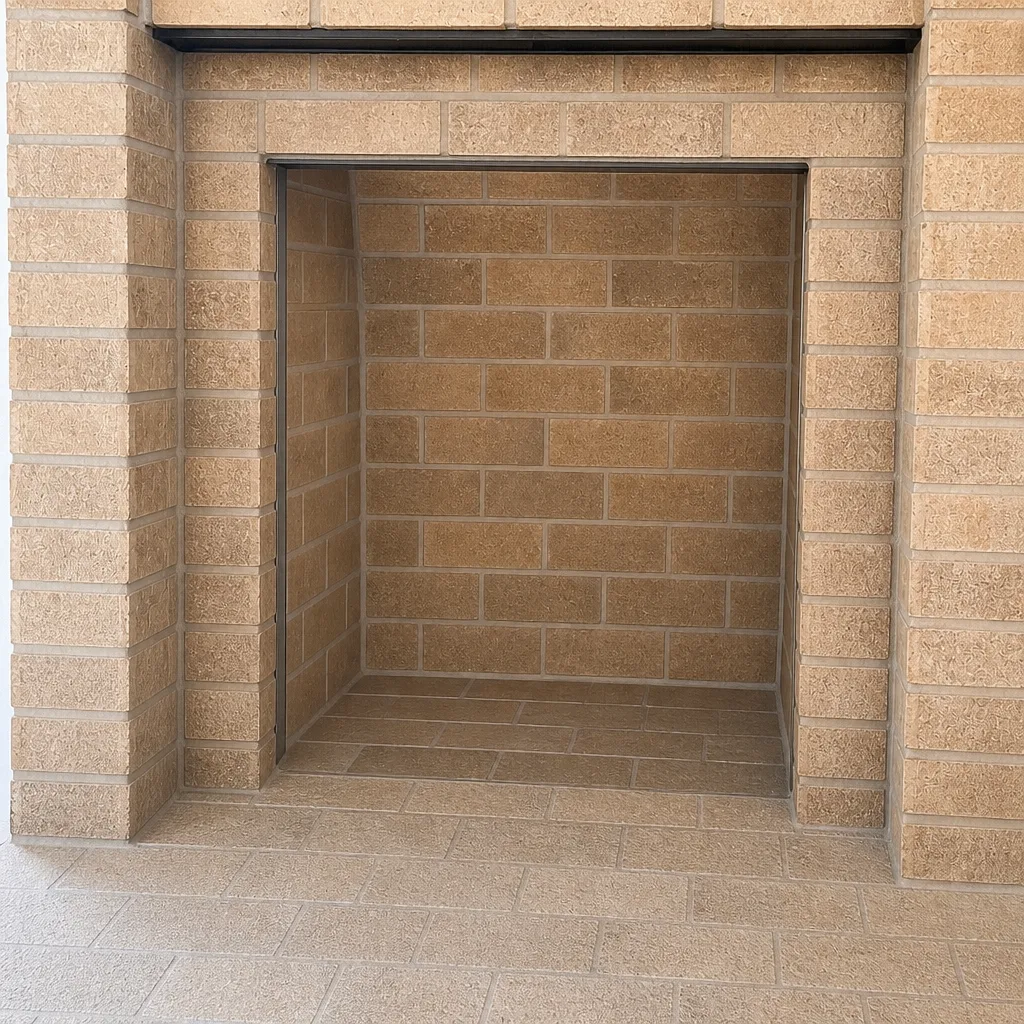
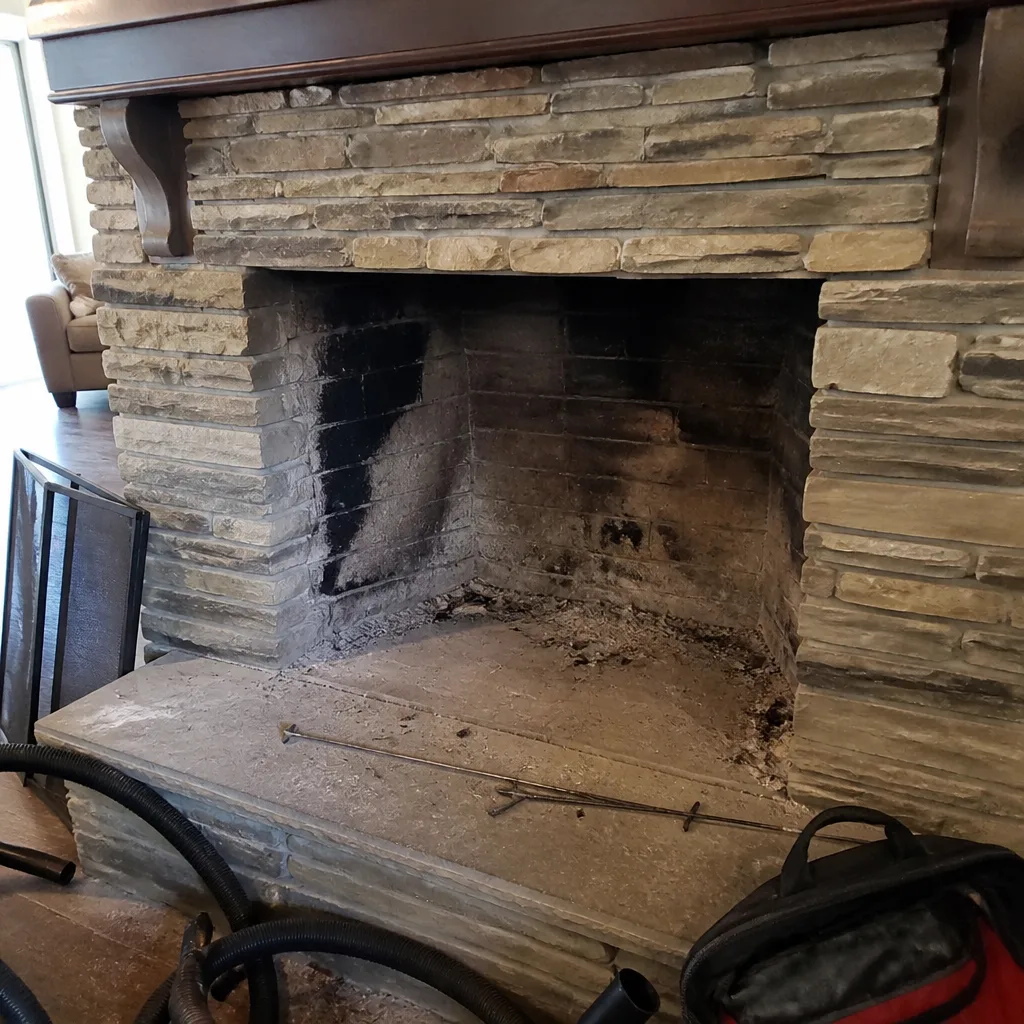
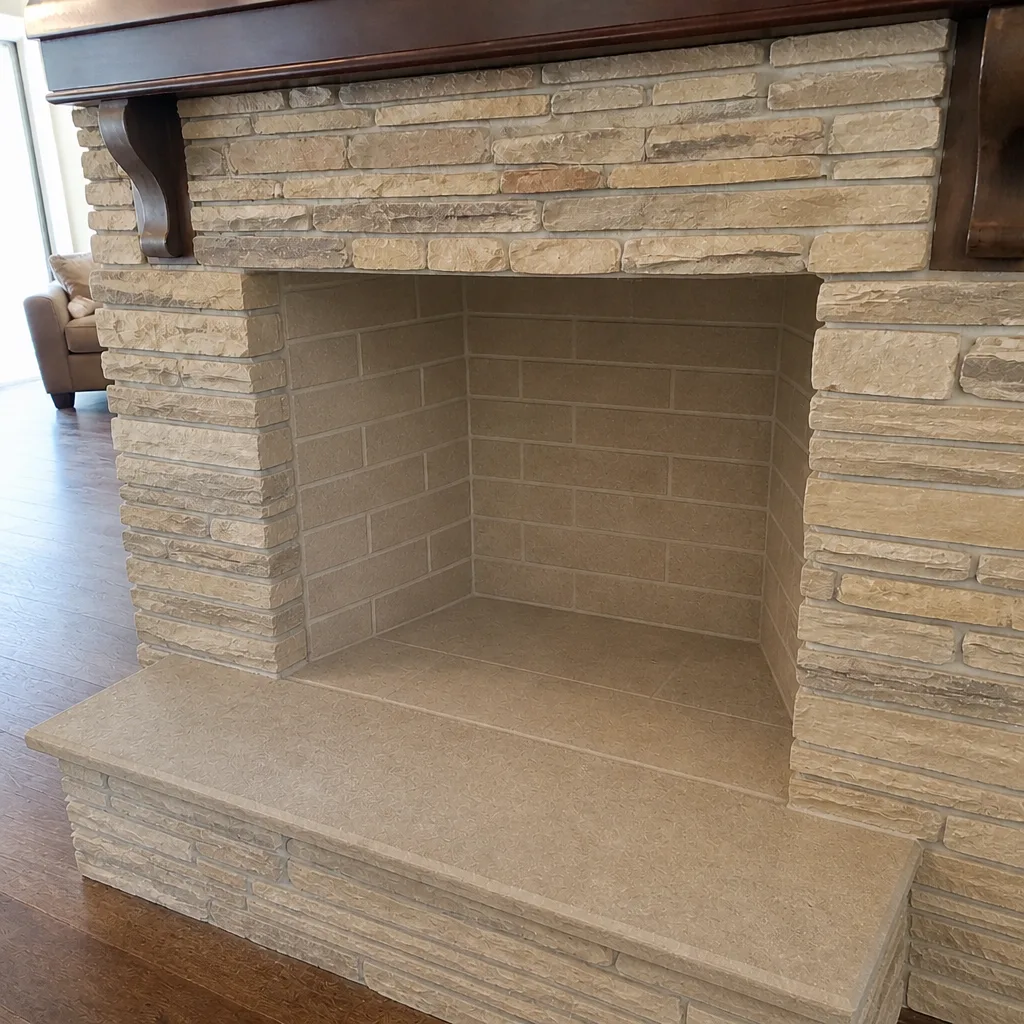
See the difference
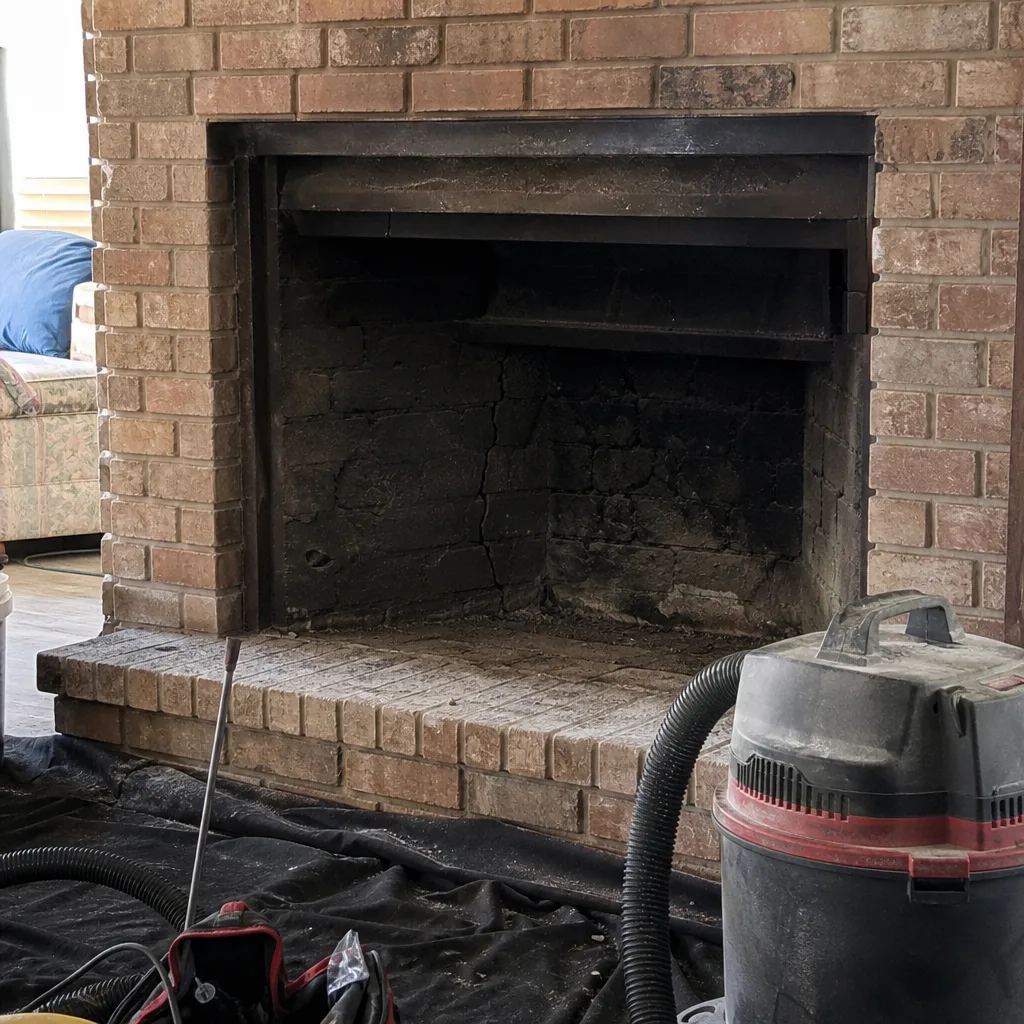 Before
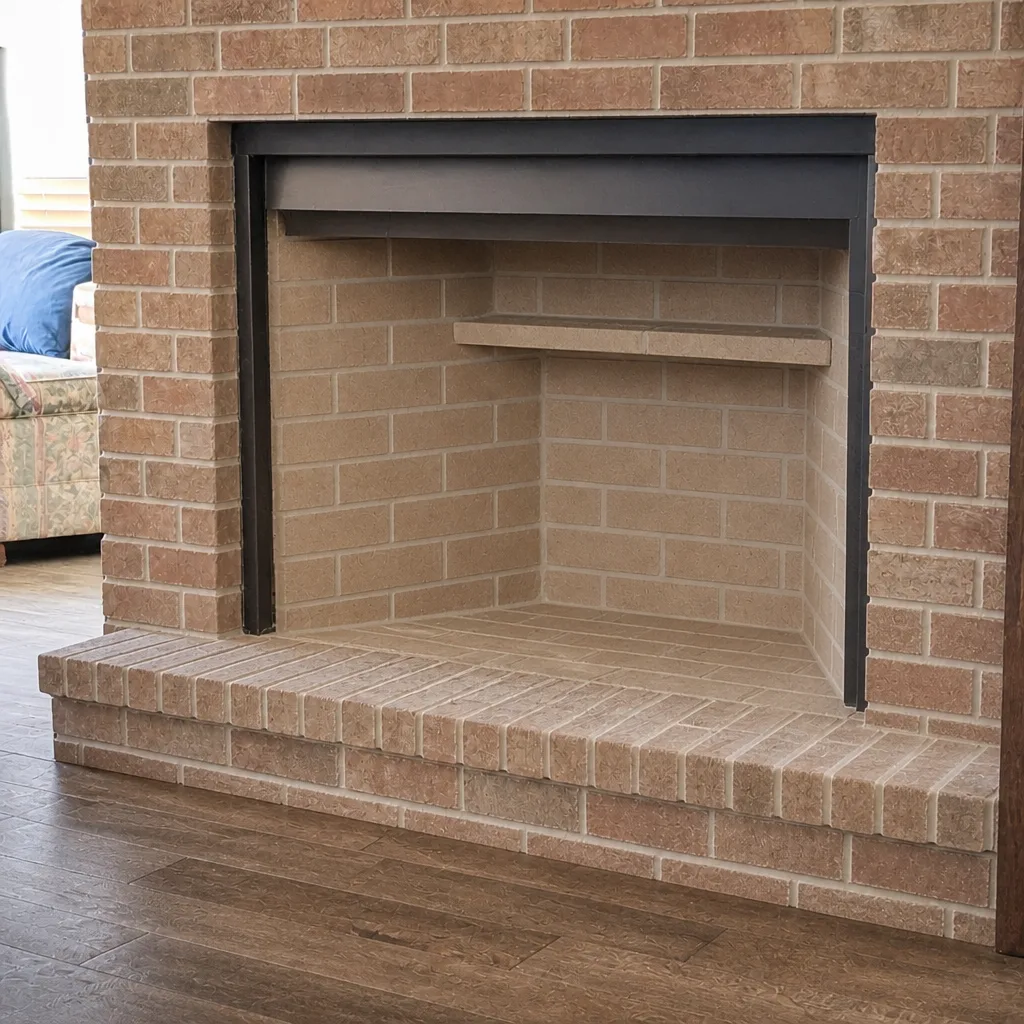 After
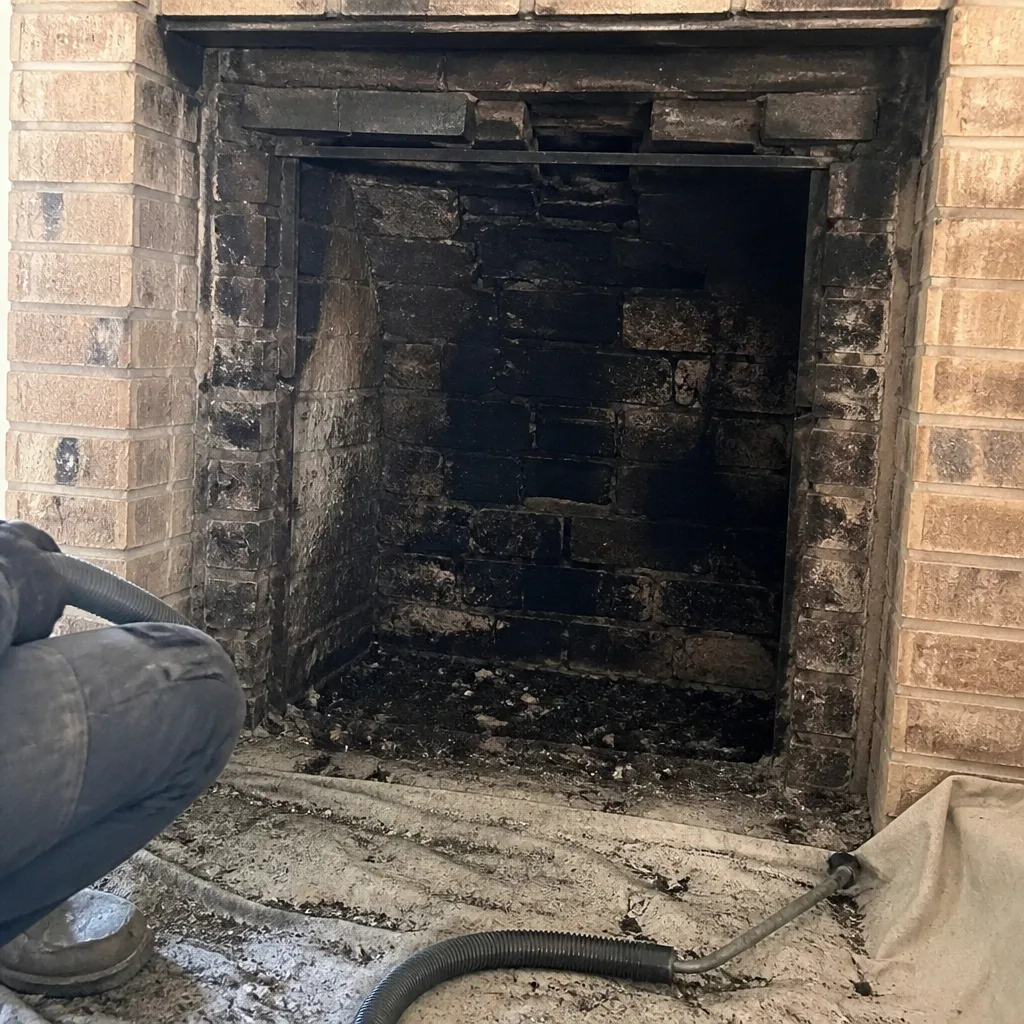 Before
 After
 Before
 After
When to Call a Professional
Some situations clearly call for a trained professional rather than a do-it-yourself attempt. If you see smoke backing into the room, smell a strong creosote odor, notice staining on the chimney exterior, or hear a rumble during a fire, stop burning and get an inspection. If you’ve had a chimney fire of any size, a storm event, or you’ve just moved into an Edmond home whose chimney history you don’t know, book an inspection before the next fire. And if it’s simply been a year since the last cleaning, schedule it before the season. Creosote ignition and carbon monoxide are real risks, and both are visible to a trained eye long before they become a problem.
For standard cleaning, any experienced homeowner can judge whether a sweep is thorough – but diagnosing a cracked liner or a deteriorating flue is not a look-and-see job. That’s where the specialist comes in. Edmond Chimney Sweep offers free estimates in Edmond – call (844) 834-5906. We answer 24/7, with fast dispatch from 7am to 7pm, Sunday through Friday.
Frequently Asked Questions
Chimney cleaning in Edmond is priced per job based on the chimney’s condition and the work required, and the written estimate sets the final price. We don’t quote a flat number over the phone because a flue that needs two sweeps and a firebox that needs a repair aren’t the same job as a routine annual clean. The estimate is free, and nothing gets recommended without camera evidence you can see yourself. Call (844) 834-5906 for an exact quote.
Not always – a liner is recommended only when the inspection and camera footage show it’s actually deteriorating or damaged. Some liners can be resurfaced with HeatShield without being torn out, and some are fine and just need cleaning. You see the footage and make the call with the facts in front of you. If it can safely wait, we’ll tell you. Call (844) 834-5906 to book the inspection.
Once a year for most Edmond households that burn wood regularly, ideally before the fall burning season. If you burn softwood or green wood heavily, or notice creosote smell or smoke backing up, check sooner. The inspection is what tells you whether your specific chimney is on the annual rhythm or needs a closer look. Call (844) 834-5906 to get on the pre-season schedule.
Creosote builds up on the flue walls and the smoke shelf, and it’s flammable – a hot fire can ignite it. Separately, Edmond’s clay soil can crack the firebox from below, and a cracked firebox lets smoke and carbon monoxide into the wall cavity instead of up the chimney. Neither is a scare tactic, just what the system does over time. An annual clean and inspection catches both. Call (844) 834-5906 for a free estimate.
Before it. Cleaning in late summer or early fall means a clear chimney for the first fire and time to handle any repair the inspection finds before you need the fireplace. Booking after the season leaves you discovering problems when everyone else in Edmond is also calling. Call (844) 834-5906 to schedule before the rush.
Yes. The smoke shelf is the ledge just behind the damper, and it’s where soot, ash, and creosote collect and sit close to the fire – one of the places a chimney fire can start. A brush run only through the flue never touches it, which is why a flue-only clean is a partial job. Our sweep covers the smoke shelf and smoke chamber as part of the clean. Call (844) 834-5906 for a free estimate.
The Bottom Line
Chimney cleaning in Edmond is a whole-system job, not a flue brush. The clay soil under your house moves with the seasons and stresses firebox joints from below. Freeze-thaw cycles widen cracks. Oklahoma wood-burning habits – seasoned hardwood versus green softwood – change how fast creosote builds. And the smoke shelf behind the damper collects the creosote a brush never reaches. A proper sweep, paired with an inspection that matches your situation, catches all of it before it becomes a repair. That’s the difference between a clean chimney and a safe one.
At Edmond Chimney Sweep we handle the full chimney lifecycle – chimney sweep, inspection, and chimney repair – with professional-grade materials like DuraFlex and HeatShield, so you don’t need a second contractor when something turns up. Our technicians have up to 14 years of experience working on chimneys in Edmond and the surrounding area. If you want a clean chimney and a safe one, we’re the call to make.
Call (844) 834-5906 for a free estimate. We answer 24/7. Fast dispatch from 7am to 7pm, Sunday through Friday.
Written by the team at Edmond Chimney Sweep.