
Last updated November 16, 2026
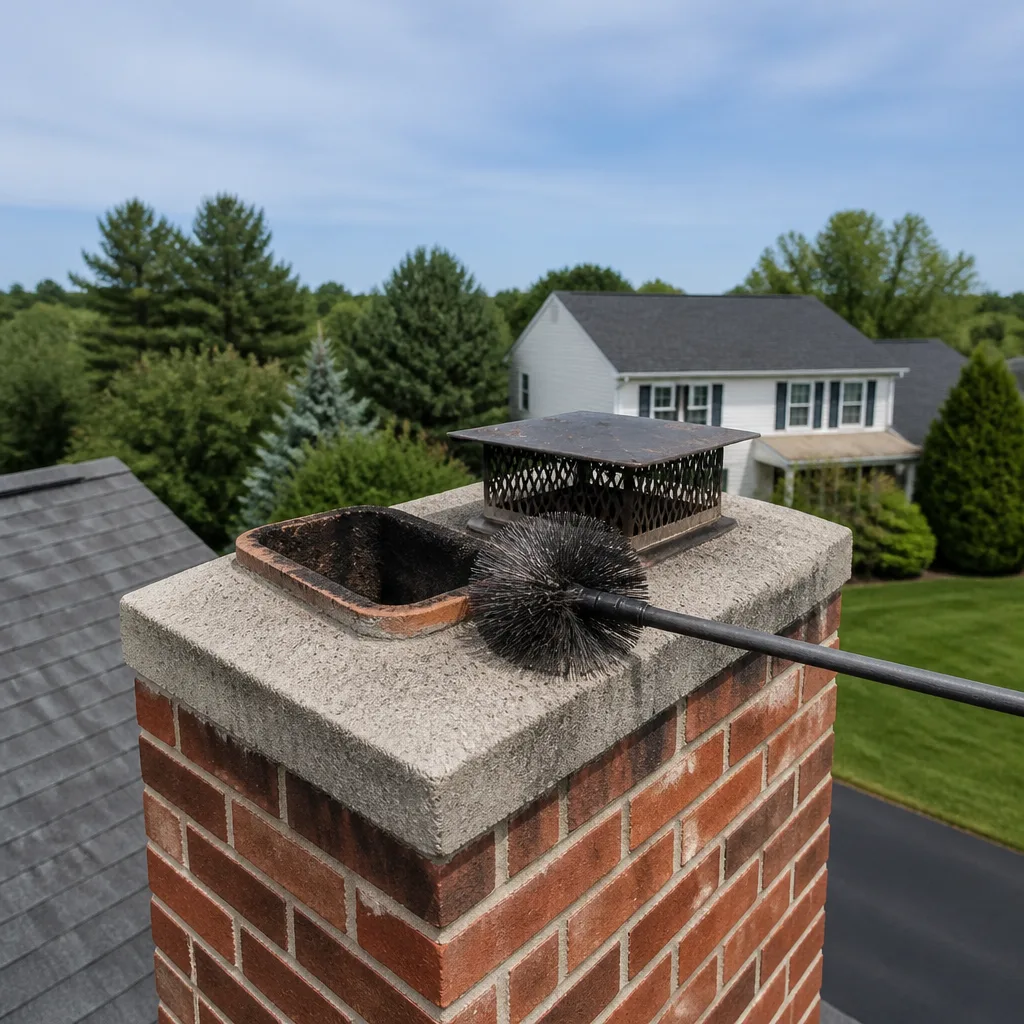 Sweep & inspection
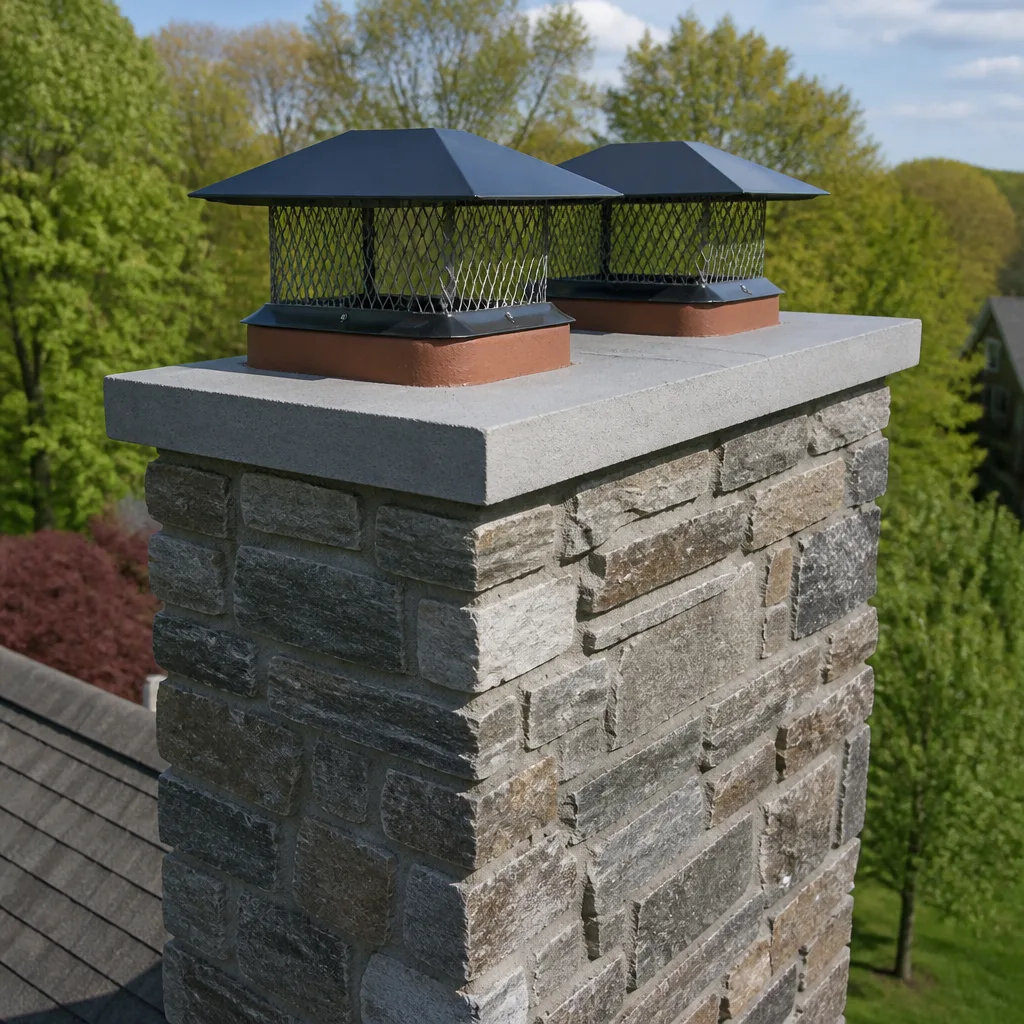 Caps & crowns
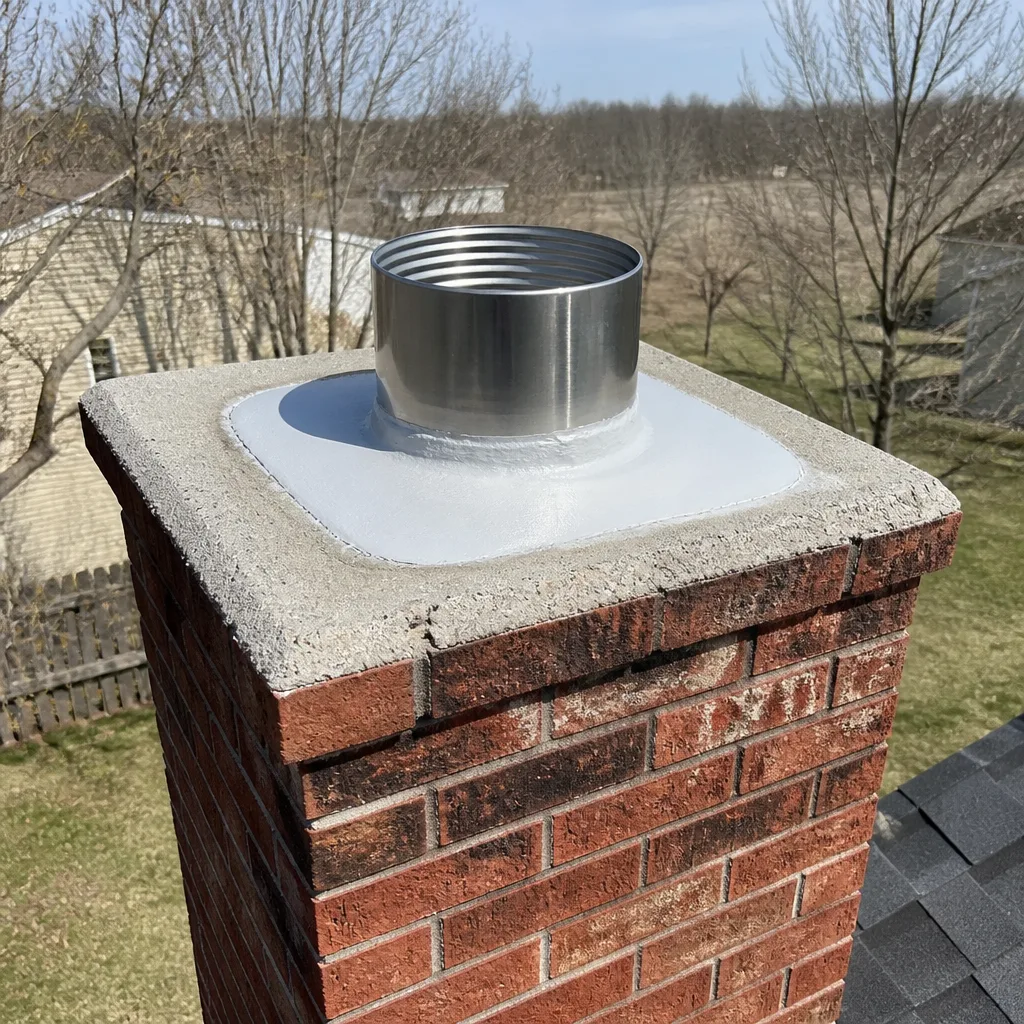 Flue relining
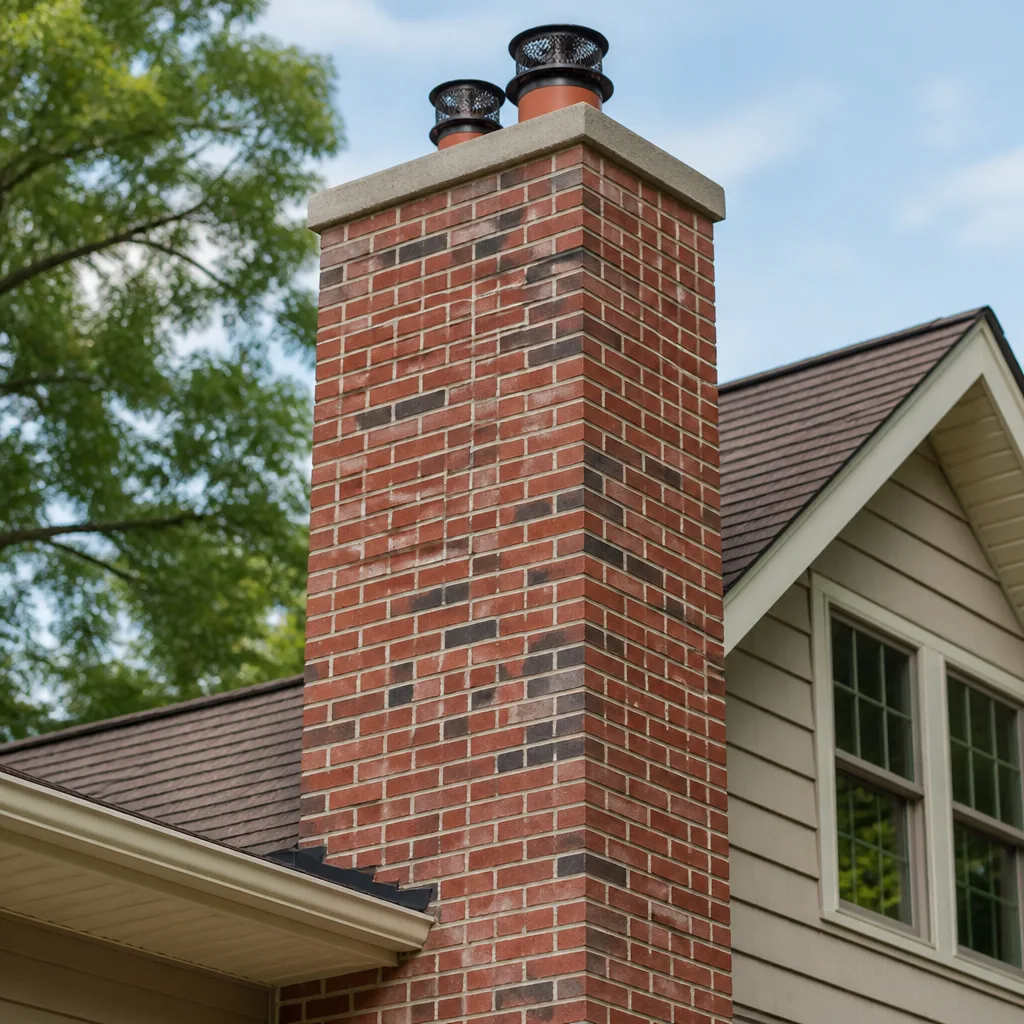 Masonry repair
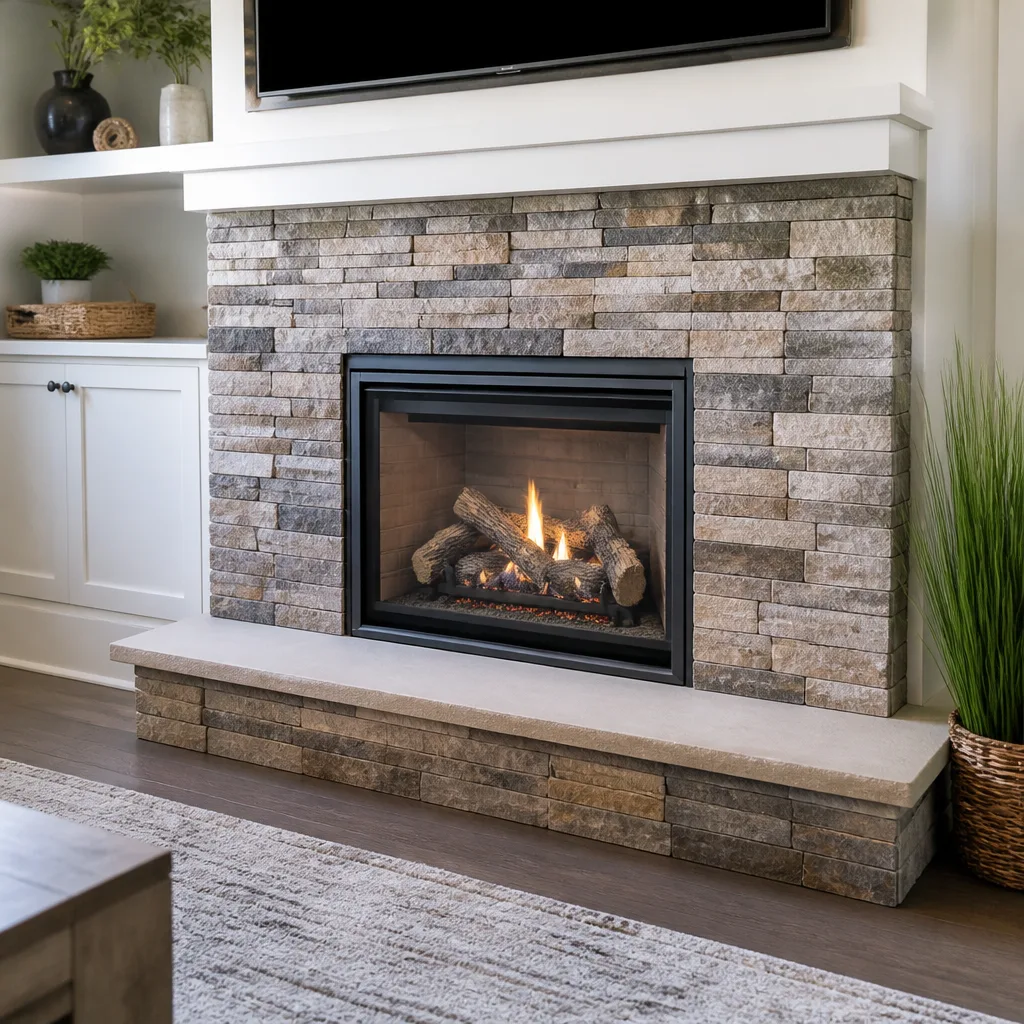 Gas fireplace service
Level 1 sweep and inspection to the NFPA 211 annual standard - flue, crown, cap, and flashing checked and photographed
Chimney sweep logs do not sweep chimneys. They loosen some creosote - which then falls where a brush and vacuum still have to collect it.
Chimney Sweep Troubleshooting in Edmond: Common Problems and How to Fix Them
If your fireplace smokes back into the room, most online guides tell you to crack a window. That’s a band-aid on a diagnosis you haven’t made yet. Smoke rollout, a lazy draw, and a smell with no smoke at all are three different symptoms pointing at three different parts of your chimney system. This guide teaches you to read those symptoms the way a specialist does, so you can describe the actual problem instead of just the smoke. You’ll learn which Edmond conditions speed up crown and mortar failure, what you can safely check from the ground, and when to stop using the fireplace.
Quick Answer
Most chimney problems in Edmond trace back to three things a standard sweep never touches: a damaged cap, a settled or cracked crown, or a gap in the flue liner. A clean flue doesn’t mean a safe chimney. Troubleshooting starts with matching the symptom (smoke rollout, slow draw, or odor only) to the part of the system that causes it, then confirming it with a camera inspection before any repair is recommended.
Styles & brands we work with
- Sweep & inspection
- Caps & crowns
- Flue relining
- Masonry repair
- Gas fireplace service
Table of Contents
- Symptom-to-Cause Map: Reading What Your Fireplace Is Telling You
- Why a Clean Chimney Can Still Have a Dangerous Liner Crack
- The Edmond Conditions That Accelerate Crown and Mortar Failure
- What You Can Safely Inspect From Ground Level
- What Requires a Camera or Professional Access
- Monitor-and-Document vs. Stop Using the Fireplace
- How Common Repairs Actually Work
- Prevention: Keeping a Solved Problem Solved
Symptom-to-Cause Map: Reading What Your Fireplace Is Telling You
Your fireplace is a system, and every symptom points to a specific part of it. Matching the symptom to the likely cause is the single most useful troubleshooting skill a homeowner can build. Here’s how the three most common complaints break down.
Smoke Rolling Out of the Firebox
Smoke that spills into the room rather than rising up the flue usually means the draw is being defeated somewhere above the firebox. The flue may be too cold to establish a draft, the chimney may be shorter than the nearby roofline or trees, or the flue itself may be partially blocked by a nest, soot buildup, or a collapsed liner section. In a two-story Edmond home, a flue running up an exterior wall stays colder longer and is more prone to this on the first fire of a cold snap.
Slow or Lazy Draw
A fire that lights but never really pulls is a different animal. Slow draw often traces to a flue that’s undersized for the firebox opening, an open damper that won’t fully open, or a partially obstructed flue cap. It can also come from negative pressure inside the house: a kitchen exhaust fan, a furnace return, or a tightly sealed newer home pulling harder than the chimney can. Edmond has plenty of newer, tightly built homes where this is the real culprit, not the chimney.
Odor Only, No Smoke Issue
If there’s no smoke problem but the fireplace smells, especially on warm, humid days or when the fireplace is unused, you’re likely dealing with a draft reversal pushing stale flue air and creosote odor back into the room. Heavy creosote deposits, a missing or damaged cap, or a flue with no top seal all contribute. This is the symptom most easily misread as “it just needs cleaning,” when the real issue may be a cap that’s deteriorated and letting weather and animals in.
- Smoke rollout: check flue height, nearby trees, blockages, and cold-flue conditions.
- Slow draw: check flue sizing, damper operation, cap condition, and household pressure.
- Odor only: check creosote levels, cap integrity, and top-of-flue sealing.
In our experience, homeowners who can describe which of these three patterns they’re seeing get a faster, more accurate diagnosis. When you’re ready for a specialist to confirm the cause, a chimney sweep combined with a camera inspection is the honest starting point.
Why a Clean Chimney Can Still Have a Dangerous Liner Crack
A clean flue and a safe flue are not the same thing. Sweeping removes creosote and soot from the interior surface, but it doesn’t test whether the liner behind that surface is intact. Clay tile liners, common in Edmond homes, crack under heat cycling. When they do, the flue gases and heat have a path into the surrounding structure instead of staying inside the liner. That’s the gap between a clean chimney and a safe one.
The Secondary Signs a Sweep Can Miss
The liner crack is often invisible from the firebox. What’s visible are the secondary signs on the chimney’s exterior and in the surrounding masonry.
- Efflorescence: a white, powdery staining on the brick or mortar. It’s the visible result of moisture moving through the masonry and depositing salts on the surface as it dries. On a chimney, it usually means water is getting in somewhere higher up.
- Spalling brick: brick faces flaking, peeling, or popping off. Freeze-thaw cycles push moisture out of the brick and take the face with it, and a compromised liner changes how moisture behaves in the entire assembly.
- Rust on the damper or firebox: a sign that water has been working its way down the flue, often past a failed crown or cap.
- White staining at the mortar joints: distinct from general weathering and worth a professional look.
None of these prove a crack exists, and none of them rule one out. They’re clues that tell a specialist where to point the camera. The only way to confirm liner condition is to look at it directly, which is exactly what our inspection service does. If the camera shows the liner is sound, we tell you so. If it doesn’t, you’ll see the footage yourself, and you can compare it to what a proper chimney repair needs to address.
The Edmond Conditions That Accelerate Crown and Mortar Failure
A chimney in Edmond takes a specific kind of punishment. The same clay soil and weather swings that make foundation work common here also work on the chimney. Understanding why helps you know what to watch for.
Clay Soil Movement
Edmond sits on expansive clay soil that swells when wet and shrinks when dry. That movement doesn’t just affect foundations. A masonry chimney is a rigid structure anchored to the house, and when the ground under one side of the chimney moves, the mortar joints carry the stress. Over repeated wet and dry cycles, hairline cracks open at the crown-to-flue joint and between brick courses. Once water gets into those cracks, the freeze-thaw cycle widens them.
Ice Cycles and Freeze-Thaw
Oklahoma’s winter pattern is the real accelerator. Repeated freeze-thaw cycles, often with moisture from rain or melting snow sitting on the crown, work on every small crack in the mortar and brick. Water seeps in, freezes, expands, and pushes the masonry apart a little more each time. The crown, that sloped concrete cap on top of the chimney, is the first line of defense. When it cracks or settles away from the flue, water runs straight down into the chimney instead of shedding off it.
What This Means for Your Chimney
These conditions make the Edmond area harder on crowns and mortar joints than many other regions. That doesn’t mean every chimney here needs work, but it does mean the crown and the joints are worth checking on a regular schedule, especially after a hard winter. It also means a repair done with the wrong material won’t last. A crown patch that’s just smeared over the top will crack again with the next freeze. Resurfacing with a proper liner material is what holds, which is why we use HeatShield for flue resurfacing rather than improvised patches.
What You Can Safely Inspect From Ground Level
You don’t need to get on the roof to start troubleshooting. A surprising amount can be learned from a pair of binoculars and a walk around the outside of the house. Here’s what to check, and what to leave alone.
- Crown condition. Look at the top of the chimney from a distance. The crown should be a smooth, sloped concrete surface that sheds water away from the flue. A visible crack, a piece missing, or a crown that looks like it’s pulling away from the flue is worth noting. Don’t climb up to touch it yourself.
- Cap condition. Is there a cap on top, and is it intact? A cap that’s rusted through, tilted, or missing is an open door for rain, birds, and squirrels. From the ground, look at the silhouette against the sky.
- Brick and mortar appearance. Scan for spalling brick faces, white efflorescence staining, and crumbly or recessed mortar joints. Note where they are, not just that they exist, since location tells a specialist which part of the flue may be involved.
- Chimney lean. A chimney that leans noticeably, or a visible gap between the chimney and the roofline, is a sign soil movement or structural settling is at work. Note it and call someone.
- Interior signs. Inside the house, look for water staining on the firebox walls, rust on the damper, or a strong creosote smell. All are clues.
What not to do from the ground: don’t climb a ladder to probe the crown, don’t poke at brick with a tool, and don’t run a brush or anything else up the flue yourself. Height work and anything inside the flue belong to a trained professional. The point of a ground check is to gather observations, not to fix anything.
What Requires a Camera or Professional Access
Some problems can only be confirmed with access you shouldn’t attempt yourself. A camera inspection takes the guesswork out of the most expensive and safety-critical questions.
What a Camera Sees That You Can’t
- Liner integrity: cracks, gaps between tiles, missing mortar, or a liner that has shifted out of alignment. This is the single most important thing to confirm and the one thing a ground check can’t answer.
- Creosote levels inside the flue: the degree and location of buildup, which tells a specialist how much sweeping is needed and whether the fire should be paused until it’s done.
- Obstructions: bird nests, leaf litter, and collapsed liner sections lodged in the flue.
- The smoke chamber: the transition space between the firebox and the flue, which is a common spot for gaps and rough surfaces that interfere with draw and collect creosote.
- The crown and cap connection from the top: where the flue meets the crown and where the cap attaches, viewed up close.
Why This Matters for Documentation
When we inspect, the camera footage and photo report are yours. If you’re selling a home in Edmond, buying one, or renewing an insurance policy, that documentation is something you can hand over. Our inspection is structured around the recognized inspection categories in the trade, so you get a record, not just a verbal opinion. That proactive layer is often what keeps a small issue from becoming an emergency. If the camera shows a problem, you’ll see the same footage a specialist does, and that’s the basis for any repair recommendation.
Monitor-and-Document vs. Stop Using the Fireplace
Not every problem is urgent, and knowing the difference is how you avoid both panic and preventable risk. Here’s the dividing line.
Monitor and Document
These issues are worth watching and getting on a schedule, but they don’t mean you have to stop lighting fires today.
- Light efflorescence on the exterior brick with no other symptoms.
- A small, stable hairline crack in the crown that a specialist has looked at and judged not yet through.
- An older cap that’s intact but showing wear.
- Minor spalling limited to one area.
For these, the right move is a scheduled inspection so the condition is documented and tracked over time. Photos at each check tell you whether it’s stable or getting worse.
Stop Using the Fireplace
These situations should pause the fire until a professional has looked at the system. They’re safety issues, not maintenance items.
- A confirmed or strongly suspected liner crack or gap, based on a camera inspection or the secondary signs of one.
- Heavy creosote buildup in the flue. Creosote is the fuel that chimney fires burn, and a badly fouled flue is a real risk. A trained professional should sweep it before you burn again.
- Smoke rollout that doesn’t resolve when you first establish a draft. Being pushed back into the room is the system telling you something is blocking or defeating its draw. Don’t keep testing it with a fire.
- A chimney that leans, or a visible gap between the chimney and the house.
- Water actively coming into the firebox.
If you’re not sure which side of the line you’re on, that’s exactly when a call is worth making. We’d rather tell you an issue can safely wait than have you burn through something that can’t.
How Common Repairs Actually Work
Once a problem is confirmed, the fix depends on what’s actually broken. Here’s how the most common repairs are handled, and why the material matters as much as the work.
Flue Relining
When a clay liner is cracked, missing, or deteriorated, the fix is a new liner installed inside the old one. For a clay flue, we use DuraFlex flexible liner systems, the standard that chimney professionals trust for relining an aging or damaged flue. The liner is sized to the appliance and the flue, not improvised. On a gas appliance, that means matching the venting to the insert.
Flue Resurfacing
When the flue is intact but its interior surface is rough, pitted, or has gaps that interfere with the draw, HeatShield resurfacing can repair the surface without full demolition. This is a repair method that lets a deteriorating flue be restored in place rather than torn out and rebuilt. It’s also how small voids in the smoke chamber get sealed.
Caps, Covers, and Venting Hardware
A cap is the one piece of chimney hardware that protects everything else, so it’s worth using a product built for the weather. We install caps and covers from Gelco, and venting products from Famco and Olympia Chimney. DuraFlex and Copperfield fill out the liner and component side. These are trade-level sources, not whatever’s on the shelf at the hardware store. The reason is practical: a cap that rusts out in a couple of winters just delays the problem and lets water in while you’re not looking.
What We Don’t Do
We’re a chimney specialist, not a general contractor. That means sweeping, inspection, and chimney repair are the whole scope. It also means when we find a problem in the chimney, we carry it through ourselves rather than referring you out, so you don’t hire a second contractor halfway through. If a problem falls outside that scope, we’ll tell you plainly and point you where you need to go.
If you’ve been told you need thousands of dollars in liner or masonry work and you have no way to see why, ask for the camera footage. That is the place any recommendation should start.
Prevention: Keeping a Solved Problem Solved
Once a problem is fixed, the goal is to keep it that way. Prevention is mostly about water and buildup, the two enemies of a chimney.
- Keep the cap in good shape. A cap that sheds water and keeps animals out keeps the flue dry. Inspect it from the ground after storm season.
- Watch the crown. The crown sheds water away from the flue. A crack or a settled edge sends it into the masonry instead.
- Get a scheduled inspection. Annual inspection catches a small issue before it becomes a repair. The recognized guidance is that chimney systems get inspected regularly, and a wood-burning fireplace gets swept based on how much you burn.
- Burn dry wood. Seasoned wood produces less creosote than green wood, which means less frequent buildup and a lower chimney fire risk.
- Note your burn pattern. A fireplace you use a few times a year and one you heat with produce very different buildup. Tell your specialist which you are.
Prevention is cheaper than repair, and in Edmond the moisture and freeze-thaw cycle is the biggest reason for that. A clean chimney is the starting point. A safe chimney is the goal, and it takes inspection and repair capability to get there.
Common Mistakes to Avoid
- Opening a window when the fireplace smokes instead of diagnosing the draw. Cracking a window can mask a negative-pressure problem, but it does nothing for a blocked flue or a collapsed liner. It hides the symptom instead of finding the cause.
- Assuming a cleaning means a clean bill of health. A sweep removes creosote; it doesn’t confirm the liner is intact. In an older Edmond home with clay tile, the liner is often the thing that matters most, and it needs a camera to check.
- Climbing onto the roof for a “quick look.” Height work is how homeowners get hurt. Ground-level observation with binoculars gets you most of the clues without a ladder.
- Patching a crown with mortar and calling it done. Smearing mortar over a cracked crown won’t survive the freeze-thaw cycle. It cracks again the first hard winter. Proper resurfacing is a different material and a different procedure.
- Using big-box caps and hardware. A cheap cap that rusts out in a couple of seasons lets water in while it’s failing. Trade-level caps and covers last, and that’s the difference between a repair and a repeat.
- Keeping a fire going with a suspected liner problem. It’s easy to tell yourself it’s fine because there’s no visible smoke issue inside. A liner crack can let heat and gas into the structure without any obvious indoor sign.
- Skipping the inspection when everything seems fine. The most expensive problems are usually found before they announce themselves. A scheduled inspection is how a small crown crack or a worn cap gets caught cheaply.
See the difference
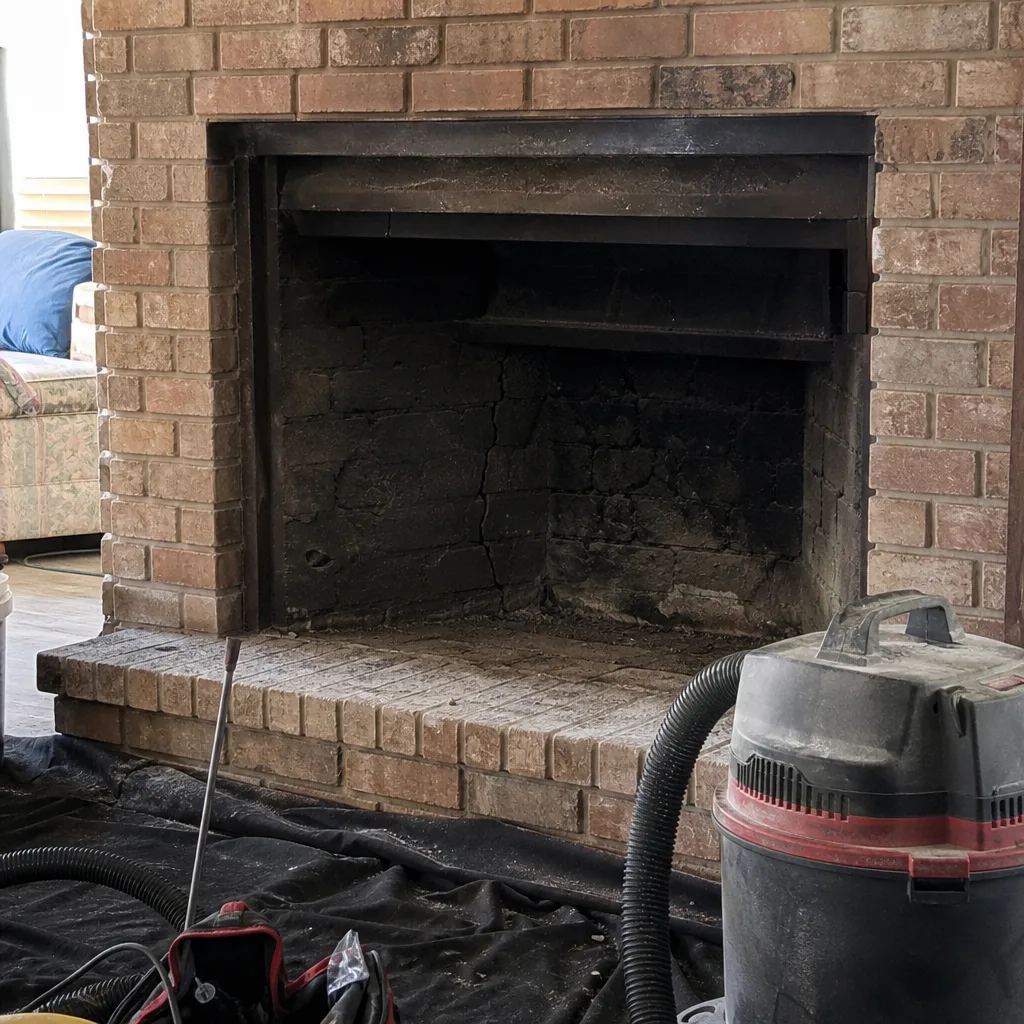 Before
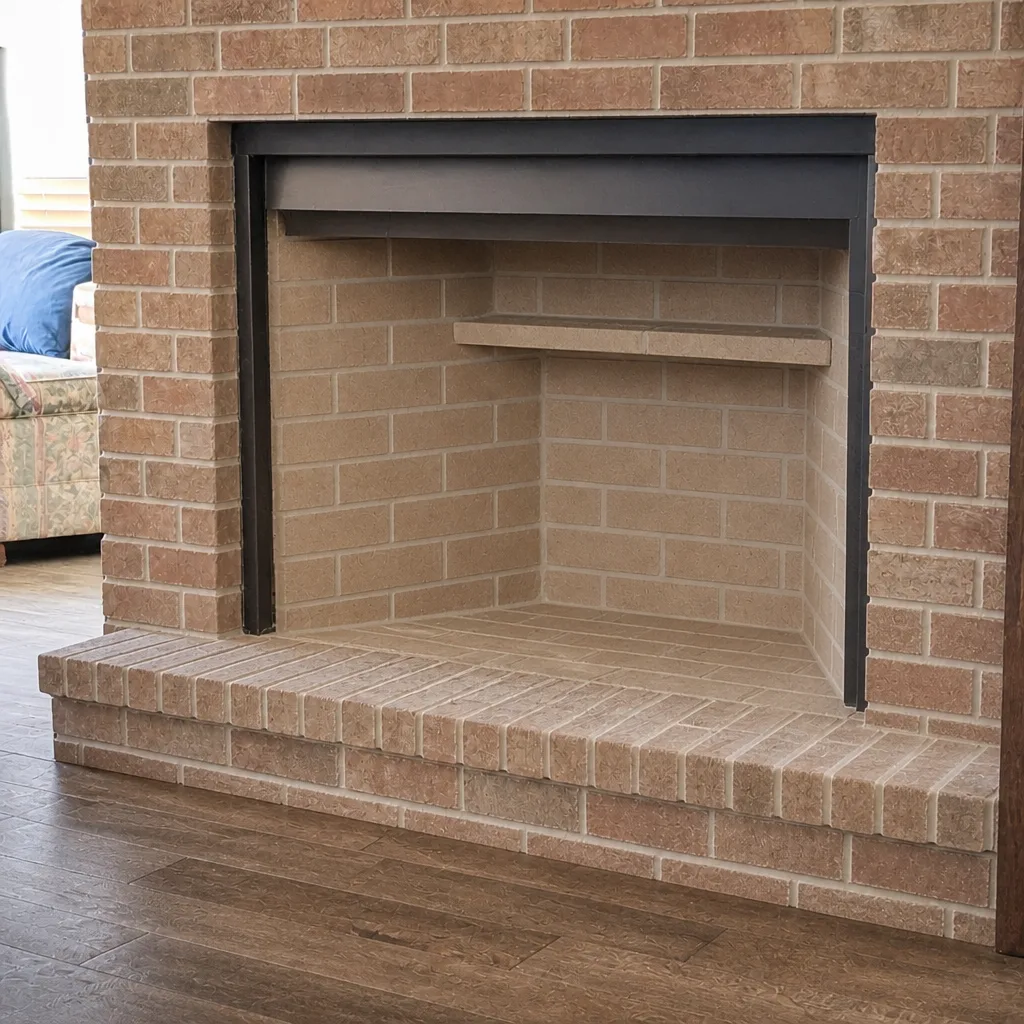 After
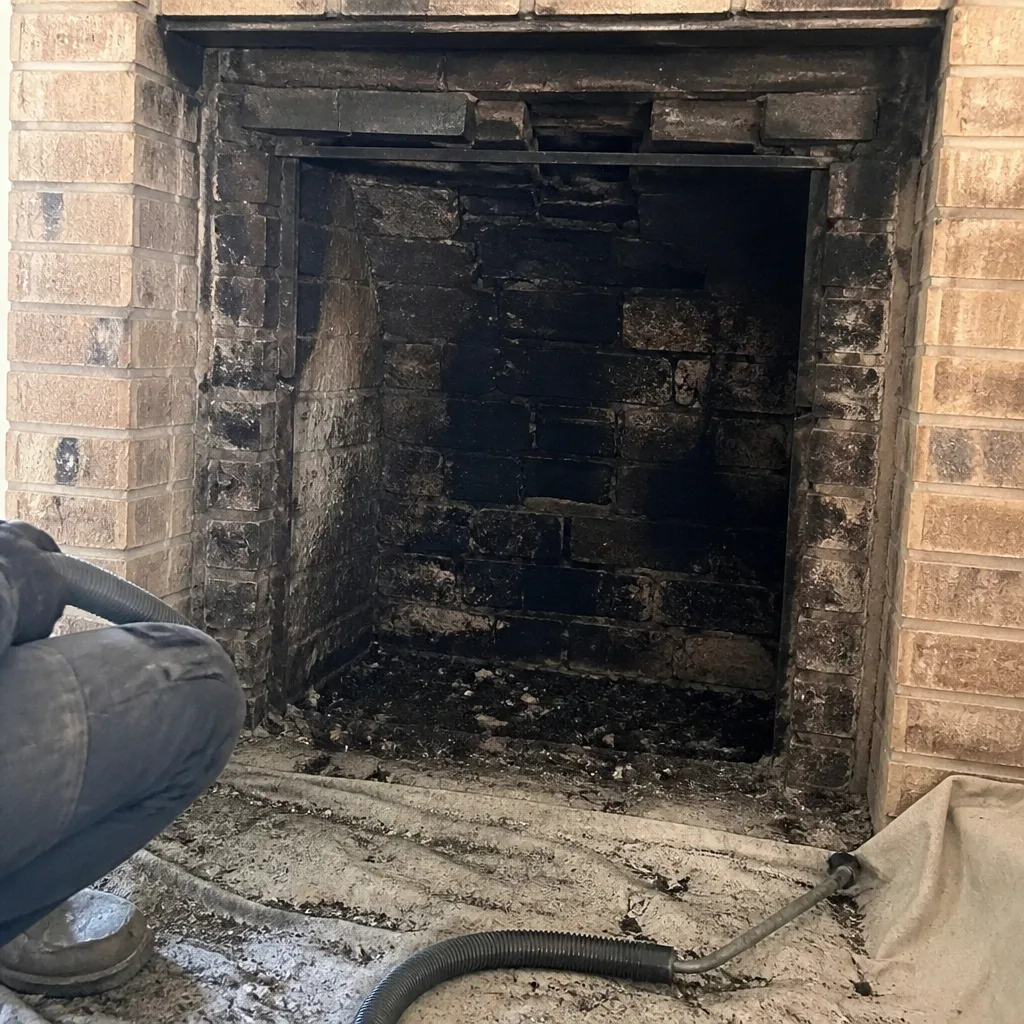 Before
 After
 Before
 After
When to Call a Professional
Call a professional when smoke rolls out of the firebox, when the draw stays lazy even after you’ve warmed the flue, when you see white efflorescence or spalling brick, or when the crown or cap looks damaged from the ground. Call when you’re buying or selling a home and need documentation, or when an insurance policy asks for it. Call when you’re not sure whether an issue can wait. The risk is highest for anything involving the liner or a fouled flue, and that’s a job for a trained professional, not a homeowner on a ladder. Edmond Chimney Sweep offers free estimates in Edmond – call (844) 834-5906. We answer 24/7, with fast dispatch from 7am to 7pm, Sunday through Friday.
Frequently Asked Questions
A chimney sweep is priced per job based on the written estimate, which is free. That’s the honest answer, because the cost depends on your flue, how much buildup there is, and whether the inspection finds anything beyond routine cleaning. The written estimate is what sets the final price, and nothing gets recommended without camera evidence you can see. Call (844) 834-5906 for an exact quote – estimates are free.
Only if the camera shows your existing liner is cracked, missing sections, or otherwise failed. Lots of Edmond homeowners are told they need a full reline before anyone has looked at the flue. A liner is needed when there’s evidence, not as a blanket recommendation. We show you the footage before recommending anything, and we tell you if it can wait. Call (844) 834-5906 for an inspection with a photo report.
A wood-burning fireplace should be swept based on how much you burn and what the inspection finds, not on a fixed calendar. A home that lights a few fires a season may go longer between sweeps than one that heats with wood. The reliable approach is a regular inspection that tells you when the buildup has reached the point where sweeping is needed. Call (844) 834-5906 to get on a schedule that actually fits your fireplace.
Creosote keeps building in the flue, and creosote is what chimney fires burn. A cracked liner or a failed crown also gets worse over time rather than better, because water and freeze-thaw work on every small opening. The main risks are chimney fire and carbon monoxide, plus water damage that spreads into the masonry. Skipping is a decision to let a small issue get more expensive. Call (844) 834-5906 for a free estimate on getting it caught now.
Intermittent smoke usually means the draw is marginal, and conditions push it over the edge. A cold flue, a windy day, a competing exhaust fan in the house, or a flue partly blocked all make it worse some days than others. In the Edmond area, a flue on an exterior wall is more prone to this because it stays cold longer. The fix depends on which cause is at work, and a camera inspection settles that. Call (844) 834-5906 to book one.
Same-day service is available for some jobs, and the honest answer is it depends on what the inspection finds and what materials the repair needs. A sweep and an inspection can be scheduled together and often done in one visit. A reline or resurfacing takes planning and materials, which is why the written estimate comes first. We answer 24/7, with fast dispatch from 7am to 7pm, Sunday through Friday. Call (844) 834-5906 to book it.
The Bottom Line
Most chimney problems in Edmond aren’t about the flue being dirty. They’re about the cap, the crown, or the liner, and those are the parts a standard sweep doesn’t check. Match your symptom to the cause: smoke rollout, slow draw, and odor-only each point somewhere different. Watch for the secondary signs – efflorescence, spalling brick, rust on the damper – because they’re clues, not proof. Get a camera inspection before you agree to thousands of dollars in liner work, and ask to see the footage. If you’re in the Edmond area and something doesn’t feel right, we’d rather look and tell you it can wait than have you guess.
Call (844) 834-5906 for a free estimate. We answer 24/7. Fast dispatch from 7am to 7pm, Sunday through Friday. We’re closed on Saturday.
For a full picture of what we handle across Edmond, start with Edmond Chimney Sweep.
Written by the team at Edmond Chimney Sweep.